Home Blog Page 16
Accurate and timely payroll impacts costs, tax compliance, and employee morale. Many organisations assume that insourced payroll is inherently superior. Yet in today's dynamic business environment, this assumption can be more costly. It can burden valuable personnel, increase compliance risks, and saddle organisations with expensive, yet obsolete, software. Workplaces are becoming more complex through...
Adam Ibrahim was working with the UN humanitarian agency, OCHA, in his home country, Sudan, when conflict between rival armed forces erupted in early 2023 and he became a refugee alongside thousands of others who continue to flee the ongoing violence. Sudan is one of the world’s largest and most complex humanitarian crises, with more than 30.4 million people – over half the population – urgently needing humanitarian assistance, yet the 2025 Sudan humanitarian needs and response plan is severely underfunded, with only 13.3 per cent of the required resources received so far. Forced to flee the country with his family after the war intensified, Mr. Ibrahim returned to help people affected by the war in Darfur. Ahead of World Humanitarian Day, marked annually on 19 August, he described his journey, from aid worker to refugee and back again to Sudan. “I was at home helping my daughter revise for her grade six exams, scheduled for the next day. Then, out of nowhere, the sound of heavy gunfire shattered the silence in my hometown, Zalingei, the capital of Central Darfur state, which remains gripped by insecurity and critical shortages of basic services. At first, I thought the gunfire would pass quickly. I rushed to stock up on food supplies and water, enough for six days. But, the streets became battlegrounds. All I could do was try to keep my family safe. Despite the chaos, I continued to work. Electricity and Internet access were sporadic, but I kept my phone charged to send daily updates to the OCHA Head of Office. It gave me purpose amid the uncertainty. Eventually, it became too dangerous to stay. The journey of displacement On the 39th day, we fled. Our family of 10 began a harrowing journey with no clear destination, only the desperate need to escape. We left behind more than just walls and belongings; we left behind a life built with love and hope. Our journey took us first to Nyala in South Darfur, then to Kosti in White Nile State. From there, we crossed the border into neighbouring South Sudan and eventually reached Uganda, a country I had heard offered stability and a good education system for children. The journey by car took 23 days. My children had no passports, and there were no refugee camps for Sudanese nationals at the time. To my relief, migration authorities in both countries were kind and supportive. In Kampala, we rented a house and received asylum status within three days. The moment I held our refugee cards, I exhaled deeply and thought ‘we’ve made it.’ I enrolled my children in school and began working online, finally finding a sense of stability. Here I was, an aid worker now a refugee, needing the same support I once provided to others. Returning to Zalingei Months later, I faced a difficult decision. Do I stay with my family or return to Darfur and continue the work I had done for years? I chose to return. Leaving my family behind was incredibly hard, but their safety was paramount. I returned to Zalingei with a renewed sense of duty to serve those still trapped in the hardship I had endured. I was also the sole breadwinner for my family and needed to ensure they could survive in Uganda. My hometown changed When I arrived in Zalingei, I barely recognised it. Buildings were scarred with bullet holes. I found another family sheltering inside our house, a doctor and his family whose own home had been destroyed. I let them stay, setting aside a small section for myself and a colleague. The house had been looted. Windows were gone and our belongings had vanished. I had hoped to find my children’s school certificates, photos, any documents left behind. But, they were gone. Everyone was armed, even children as young as 15. People were tense, traumatised and always bracing for the next wave of violence. Machine guns and wreckage in West Darfur I didn’t stay long in Zalingei. Soon I was called to El Geneina in West Darfur, a town devastated by violence, and whose people desperately needed humanitarian support. El Geneina’s streets were strewn with the wreckage of burned-out military vehicles. Armed men patrolled in pickup trucks mounted with machine guns. The humanitarian needs were immense. People lacked food, shelter, household essentials, healthcare, clean water and protection, but we never had enough resources for them. Family, sacrifice and hope for Sudan It’s heartbreaking to witness the suffering caused by the recent donor funding cuts. Many organizations have been forced to scale back their operations, leaving countless people without help. Still, we did all we could. Between 2023 and 2025, we reached more than 800,000 displaced people with critical assistance, in West and Central Darfur. I also went on to work with OCHA colleagues in Chad to coordinate cross-border humanitarian convoys into Darfur. These convoys were lifelines, delivering food, medicine and supplies to communities cut off by conflict. Today, I remain in Sudan. My family is still in Uganda. I visit them once a year, but the separation is painful.”
Adam Ibrahim was working with the UN humanitarian agency, OCHA, in his home country, Sudan, when conflict between rival armed forces erupted in early 2023 and he became a refugee alongside thousands of others who continue to flee the ongoing violence. Sudan is one of the world’s largest and most complex humanitarian crises, with...
Africa Tech Festival (https://AfricaTechFestival.com/), the continent’s most influential technology and innovation gathering, has released details of AfricaIgnite (https://apo-opa.co/3HPwCvv), its core event track aimed at driving growth, investment, and impact in Africa’s startup ecosystem. The event provides a platform for showcasing Africa’s most promising startups, founder journeys, and innovation ecosystems. Crucially, AfricaIgnite also connects startups and...
Humphrey Asiimwe, CEO, Uganda Chamber of Energy and Minerals (UCEM) will speak at this year’s African Energy Week (AEW): Invest in African Energies 2025, which returns to Cape Town from September 29 to October 3. With extensive experience in energy policy, local content development and regional cooperation, Asiimwe is set to provide key insights into Uganda’s expanding oil, gas and mineral sectors and the private sector’s role in driving sustainable industrial growth. His participate comes as Uganda’s energy and minerals sectors continue to gain momentum. In the oil and gas industry, the East African Crude Oil Pipeline has surpassed 58% overall progress, with engineering works nearly complete and over 2,400 personnel – 90% of them Ugandan – employed on the project. The 1,443-km heated pipeline – set to be the longest of its kind globally – will transport crude oil from Uganda’s Lake Albert basin to Tanzania’s Port of Tanga, positioning Uganda as a regional oil producer. AEW: Invest in African Energies is the platform of choice for project operators, financiers, technology providers and government, and has emerged as the official place to sign deals in African energy. Visit www.AECWeek.com for more information about this exciting event. Uganda’s mining industry is also undergoing a significant transformation. The country recently signed its first-ever Mineral Production Sharing Agreement for the redevelopment of the Kilembe copper-cobalt mine and launched a state-owned mining company to manage equity interests and promote domestic value addition. Uganda is seeking strategic partnerships and private investment to unlock large deposits of gold, copper, cobalt and rare earth elements, critical for clean energy technologies. Under Asiimwe’s leadership, UCEM has helped secure over $2.1 billion in local oil and gas contracts for Ugandan companies and facilitated the training of over 7,000 nationals in petroleum-related fields. He continues to champion policy harmonization across East Africa to unlock financing opportunities, enable small- and medium-sized enterprise participation and enhance regional cooperation. “Humphrey Asiimwe has played a central role in driving local participation, aligning regional policies and shaping sustainable energy growth through strategic partnerships and private sector leadership. His efforts have created real opportunities for Ugandan businesses and workers alike and he continues to be a key voice for local empowerment and long-term industrialization in East Africa,” states Tomás Gerbasio, VP of Commercial and Strategic Engagement, African Energy chamber.
Humphrey Asiimwe, CEO, Uganda Chamber of Energy and Minerals (UCEM) will speak at this year’s African Energy Week (AEW): Invest in African Energies 2025, which returns to Cape Town from September 29 to October 3. With extensive experience in energy policy, local content development and regional cooperation, Asiimwe is set to provide key insights into Uganda’s expanding...
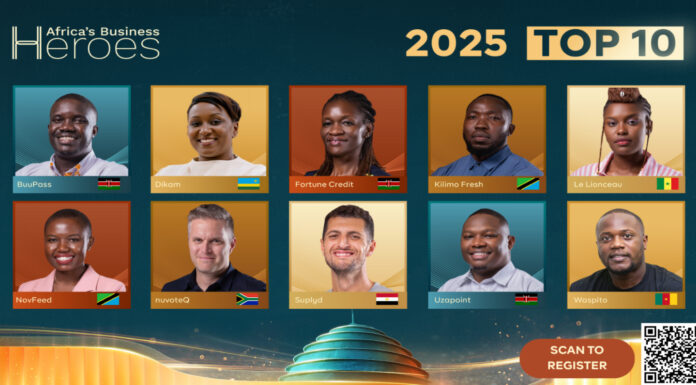
The Africa’s Business Heroes (ABH) (https://AfricaBusinessHeroes.org/) Prize Competition, a philanthropic initiative of Alibaba Philanthropy, today revealed the Top 20 entrepreneurs selected to advance to the 2025 Semi-Finals, taking place in Dakar, Senegal on 10 – 11 September 2025. The selection of the Top 20 reflects a rigorous and highly competitive process. Starting from nearly 32,000 applications spanning the African continent, candidates advanced through multiple rounds, including the Top 50 Round 2 interviews and a thorough due diligence process. From this pool, 20 exceptional entrepreneurs were chosen, representing diverse sectors and embodying the spirit of African innovation and resilience. They now stand just one step away from the Grand Finale, where they will compete for a place among the Top 10 Heroes. Those who advance will not only share in grant funding ranging from $100,000 to $300,000 USD but also gain access to mentorship opportunities, international networks, and unparalleled global visibility. “Year after year, we are inspired by the caliber of entrepreneurs we see at ABH. The 2025 Top 20 span 9 countries and 10 sectors from healthtech and fintech to agritech and sustainability, reflecting Africa’s dynamic innovation landscape. We continue to see strong momentum in digital transformation, scalable B2B and subscription models, and impact-driven businesses tackling challenges from financial inclusion to food security and environmental sustainability. These trends not only highlight the resilience of African founders but also underscore the continent’s potential to deliver both profitability and social impact,” said Zahra Baitie-Boateng, Africa MD of ABH. This year’s Semi-Final marks the first time ABH is hosting in a francophone country and a first in Senegal, underscoring the country’s growing influence as a hub for entrepreneurship and innovation in Africa. Senegal’s strong 8.6% GDP growth and its upcoming role as host of th*2026 Youth Olympic Games—the first ever on African soil—further cement its position as a dynamic center for talent, business, and global events. The event will feature high-stakes pitch sessions, networking opportunities, and mentorship programs for the finalists. The Top 20 finalists will present their businesses before a distinguished panel of judges, each bringing deep expertise and perspective from across the entrepreneurial and investment ecosystem. The panel includes: Hasan Haidar, Managing Director of PlusVC and a long-standing ABH judge, recognized for his extensive experience in venture capital and commitment to supporting early-stage startups across the Middle East and Africa. Moulaye Taboure, CEO and Founder of ANKA, a pioneering e-commerce and fintech platform empowering African artisans and merchants to access global markets. A former ABH Top 10 Hero, Moulaye’s participation marks a milestone for the program as the first time an alumnus has returned to serve as a judge. Jason Pau, Vice President of Alibaba Group and Executive Director (International) of the Jack Ma Foundation, who has spearheaded global philanthropic initiatives including Africa’s Business Heroes. Together, this panel will evaluate the finalists based on innovation, impact, scalability, and leadership, ultimately determining which entrepreneurs will advance to the Top 10 stage of the competition. This landmark event is made possible through the support of Alibaba Philanthropy, together with leading Senegalese sponsors Wave, Sonatel and InTouch Group. Their partnership underscores a shared commitment to fostering innovation, empowering entrepreneurs, and positioning Senegal as a driving force in Africa’s economic transformation. “Wave is honored to partner with Africa’s Business Heroes in bringing this landmark event to Dakar. For us, this is more than sponsorship, it is a commitment to empowering entrepreneurs, accelerating innovation, and positioning Senegal as a hub of Africa’s economic transformation. Hosting the Semi-Finals here reflects our belief in the power of young African talent to shape a more inclusive and prosperous future for the continent” emphasized Coura Tine Sene, Regional Director and Head of Public Affairs at Wave, said.” Now in its 7th edition, the ABH Prize Competition continues to spotlight and support African entrepreneurs who are making a positive impact in their communities. This year’s Semi-Final is further strengthened by the collaboration of key ecosystem partners, including Ignite.E, Impact Hub Dakar, SenStartup, and African Leadership University (ALU), who are helping to expand outreach and foster deeper engagement within Senegal’s vibrant entrepreneurial landscape. Meet the 2025 Top 20 Heroes: Adriaan Kruger – nuvoteQ (South Africa) – HealthTech / Digital Solutions Baraka Chijenga – Kilimo Fresh Foods Africa Limited (Tanzania) – AgriTech / Food Security Blandine Umuziranenge – Kosmotive (Rwanda) – HealthTech / Women Empowerment Bundi Mbuthia – Uzapoint Technologies Limited (Kenya) – SME Tech / Digital Tools Diana Gerald – NovFeed (Tanzania) – AgriTech / Biotech Gohar Said– Suplyd (Egypt) – FoodTech / Supply Chain Janet Kuteli – Fortune Credit Limited (Kenya) – FinTech / Microfinance Jean Lobe Lobe – Waspito (Cameroon) – HealthTech / Telemedicine Jessica Roussos – BluLever Education Pty Ltd (South Africa) – EdTech / Skills Training Khadija Churchill – Kwanza Tukule Foods Limited (Kenya) – FoodTech / Distribution Louisa Olafuyi – Kunda Kids Ltd (Uganda) – EdTech / Children’s Media Mofehintolu Funso – CredPal (Nigeria) – FinTech / Credit Access Moka Lantum – CheckUps Medical Center (Kenya) – Healthcare / FinTech Mukashahaha Diane – DIKAM Ltd (Rwanda) – Textiles / Women & Youth Empowerment Neamat Eltazi – Poultry Sync (Egypt) – AgriTech / Sustainability Racine Sarr – SAWA by Shop Me Away (Senegal) – Logistics / Digital Platforms Samwel Ezikiel – Mwamba Mining Limited (Tanzania) – Mining / Sustainability Siny Samba – Le Lionceau (Senegal) – FoodTech / Infant Nutrition Thomas Patrick – Franc Group (South Africa) – FinTech / Wealth Management Wycliffe Onyango – BuuPass (Kenya) – Transport / Digital Ticketing For more information on the Top 20 Heroes, visit: https://AfricaBusinessHeroes.org/
The Africa’s Business Heroes (ABH) (https://AfricaBusinessHeroes.org/) Prize Competition, a philanthropic initiative of Alibaba Philanthropy, today revealed the Top 20 entrepreneurs selected to advance to the 2025 Semi-Finals, taking place in Dakar, Senegal on 10 – 11 September 2025. The selection of the Top 20 reflects a rigorous and highly competitive process. Starting from nearly...
Despite their popularity among employees, informal messaging platforms pose significant risks to organisations’ cybersecurity. The 2025 KnowBe4 Africa Annual Cybersecurity survey found that 93% of African respondents use WhatsApp for work communications, surpassing email and Microsoft Teams. What can organisations do to protect themselves from data leakage and other threats?  For many organisations, platforms...
West & Central Africa Mining Summit & Expo (WaCA Mining 2025) returns next month 25-26 September 2025 at the Kempinski Hotel Gold Coast City in Accra, Ghana, heralding a critical juncture for the region’s mining sector. Why WaCA Mining Matters This Year As global demand shifts toward sustainable practices, WaCA Mining 2025 emerges as the definitive platform for unlocking African mineral potential—convening policymakers, mining professionals, financiers, and solution innovators around strategic action and investment. The West & Central Africa mining regions are undergoing bold transformations. In Ghana, Minister Emmanuel Armah-Kofi Buah reaffirmed Ghana’s commitment to ushering in sweeping reforms: “Ghana is not just a mining destination—we are proof that responsible investment and transformative development can go hand in hand.” He added: “We are currently very far advanced in renewing and reforming our mining policy... introducing cooperative mining to empower communities and ensure responsible and sustainable practices.” New Royalty models are being considered. These statements underscore Ghana’s transition toward responsible, community-driven resource governance, making WaCA Mining 2025 a timely convergence of policy, opportunity, and investment. Key highlights of WaCA Mining 2025 include:  Visionary perspectives on policy, partnerships, and investment strategies.  Spotlight on ESG compliance, local content, financing innovation, and infrastructure.  Insightful presentations on game-changing solutions for mining operations and sustainability  Exhibition Showcase: Innovative solutions powering the future of mining.  Networking Platform: Connecting stakeholders with mining projects across West & Central Africa. "Africa’s mineral wealth is at the heart of the global energy transition. WaCA Mining 2025 provides the platform for decision-makers to align strategies, mobilize capital, and unlock the full value of the region’s resources,” said Maggie Tan, CEO of Magenta Global Singapore, organisers of WaCA Mining. With West & Central Africa home to world-class gold, bauxite, manganese, iron ore, and critical minerals, the summit is set to highlight the region’s role in powering global green technologies and sustainable development.
West & Central Africa Mining Summit & Expo (WaCA Mining 2025) returns next month 25-26 September 2025 at the Kempinski Hotel Gold Coast City in Accra, Ghana, heralding a critical juncture for the region’s mining sector.Why WaCA Mining Matters This YearAs global demand shifts toward sustainable practices, WaCA Mining 2025 emerges as thedefinitive platform for unlocking African...
By Samson Oyugi Africa’s largest hydroelectric project The GERD, located on the Blue Nile in Ethiopia with a capacity of 5,150–6,450 MW and a reservoir holding up to 74 billion cubic meters of water is set for inauguration on 9th September 2025 after the completion of the construction works that began in 2011. The dam has been a source of pride for Ethiopia, funded domestically through bonds and public contributions, and is expected to double the country’s electricity output and even enabling energy exports to neighboring countries such as Sudan, Kenya, and Djibouti. The project sparked tensions with downstream nations of Egypt and Sudan, who fear it could reduce their Nile water supply. Egypt relies on the Nile for 97% of its water needs and has referred to the dam as an “existential threat” and labeled its operation without a binding agreement as a violation of international law. Sudan had also expressed concerns, though it has oscillated due to potential benefits like regulated water flows that could reduce on its perennial flooding . Despite years of negotiations, no legally binding agreement on the dam’s operation has been reached after meetings of negotiations up to the African Union level. Ethiopia through Prime Minister Abiy Ahmed has described the dam as a “shared opportunity” for regional cooperation and has extended an invitation to African countries including Egypt and Sudan to it's inauguration. Through his address on the ongoing preparations read to the media in Kenya by the Ethiopian Ambassador to Kenya His excellency Demeke Atnafu Ambulo he said, "Africa should be proud of such an infrastructure that is going to benefit not only Ethiopia but the greater East Africa region and even beyond economically hence solving African problems using African solutions just as Ethiopia has shown". The GERD’s completion marks a significant milestone to Ethiopia’s energy ambitions with its population projected to grow to 240 million by the year 2030 from current 130 million with half the population connected to reliable energy. With the increase in population, their energy demand will too increase.
By Samson Oyugi Africa’s largest hydroelectric project The GERD, located on the Blue Nile in Ethiopia with a capacity of 5,150–6,450 MW and a reservoir holding up to 74 billion cubic meters of water is set for inauguration on 9th September 2025 after the completion of the construction works that began in 2011.
With a career spanning multiple continents, Bartesh Shah, the Chief Executive Officer of SBM Bank Kenya brings a wealth of international experience to SBM Bank Kenya.  Known for his passion for innovation, Mr Shah’s strategy revolves around innovation and the creation of a mobile-first approach to digital banking. 
SBM Bank Kenya: A mobile-first digital banking strategy takes shape   With a career spanning multiple continents, Bartesh Shah, the Chief Executive Officer of SBM Bank Kenya brings a wealth of international experience to SBM Bank Kenya.  Known for his passion for innovation, Mr Shah’s strategy revolves around innovation and the creation of a mobile-first approach to digital banking.  His ability to blend global best practices with local insights has been a driving force behind the bank’s renewed vigour. He talked to Business Insights Africa about his plans to make SBM Bank the most preffered financial partner for retail, SME and institutional customers. Excerpts   How has digitalization impacted the bank’s business? Digitalization has transformed SBM Bank, enhancing efficiency, accessibility, and customer experience. Our Mfukoni mobile and internet banking platform has expanded to include services such as ITAX, eCitizen payments, and Platinum Saver account management, ensuring seamless banking for our customers. . SBM  bank gained recognition for The  ‘Digital Banking Innovation of the Year’ Award by the FDI Insider Awards, which serves as a testament to delivering quality banking experience to our customers By automating banking processes, we have improved operational efficiency, reduced costs, and enhanced transaction security. We also use data-driven insights to personalize customer experiences and provide tailored banking solutions. Additionally, our robust cybersecurity measures protect customer transactions, ensuring trust and reliability. On the security front, digitalization has improved our ability to manage risks, with advanced cybersecurity measures ensuring safe transactions and protecting sensitive data.   Briefly touch on key performance indicators Our key performance indicators (KPIs) are designed to capture the full scope of our performance in the banking sector, especially in a challenging business environment. Customer growth is a fundamental metric, and we’ve seen a steady increase in both individual and corporate clients, which reflects the trust we’ve built over time. Deposit growth has been another area of focus, where we’ve maintained strong inflows despite economic pressures, demonstrating the resilience of our business model.   Profitability is a critical KPI, and SBM Bank has remained consistently profitable, even during periods of market volatility. This robust performance is a testament to our effective risk management strategies and our ability to adapt to shifting market conditions. Additionally, we track customer satisfaction metrics to ensure we are delivering exceptional service and value, which has remained strong due to our focus on personalized banking and customer-centric solutions. We also monitor the rate of digital adoption, as more customers embrace our mobile and online banking platforms. This shift has been crucial for expanding our reach and ensuring that customers in remote or underserved areas can access our services. Lastly, we closely drive the impact of our initiatives targeting SMEs, youth, and women-led businesses. The success of these programs, reflected in the increased number of successful businesses and clients served affirms our commitment to driving economic inclusion.   As an experienced hand in banking, where do you want to take SBM Bank? My vision is for SBM Bank to become the preferred financial partner, offering innovative banking solutions and fostering economic growth. Our strategic location along the Indian Ocean rim positions us as a key player in cross-border trade finance. We are committed to digital transformation, customer-centric solutions, and sustainable banking practices.  Our corporate responsibility initiatives include environmental conservation, where we have conducted tree planting and turtle conservation initiatives. We also undertake gender equality and youth empowerment programs, ensuring a positive societal impact. As SBM, we aim to expand our reach, strengthen our digital capabilities, and continue supporting key sectors such as agriculture, service, health, manufacturing, hospitality and many more.  We also appreciate that customers need a trusted banking partner in their financial journey and we offer reliable payments solutions to drive their growth as individuals, institutions or communities. Our payment solutions span across different channels, namely; Mfukoni, Bulk Payments and international remittance and this ensures efficient transactions for various payment needs. We believe in empowering our customers with solutions that transcend mere functionality. Our payment services are more than just tools—they are enablers of success, growth, and financial freedom. Whether you are an individual managing everyday transactions, an SME scaling operations, or a corporate entity expanding internationally, SBM Bank aspires to be your trusted payments partner every step of the way to enable you experience seamless payments and limitless possibilities with SBM Bank.   What kind of impact have you made as a bank? SBM Bank has played a pivotal role in enhancing financial accessibility, supporting business growth, and promoting economic development. Our tailored financial solutions, structured credit services, and commitment to sustainability have strengthened the banking sector. We continue to invest in financial literacy, entrepreneurship support, and community development initiatives. Our vision is to redefine banking by making it more accessible, innovative, and inclusive, driving long-term prosperity in Kenya. What’s SBM Bank’s outlook? Looking ahead, we would like our legacy to be defined by the transformative impact we’ve had on Kenya’s financial sector—making banking more accessible, innovative, and inclusive. Our strategy is focused on sustainable growth, continuous innovation, and deep community engagement, ensuring that SBM Bank Kenya remains a trusted partner in shaping the country’s economic future.              
“We continue to innovate our banking solutions for the retail, corporate and SME sectors to ensure relevance and responsiveness in our banking solutions,” says Mr Shah By Amos Wachira With a career spanning multiple continents, Bartesh Shah brings a wealth of international experience to SBM Bank Kenya. His ability to blend...

MOST POPULAR

HOT NEWS