



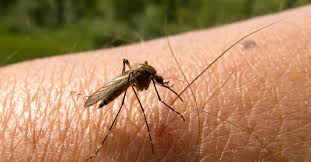

Over the next five years, as part of its commitment, Novartis will invest more than USD 100 million to advance research and development of next-generation treatments to combat emerging resistance to artemisinin and other currently used antimalarials
Company to invest more than USD 100 million to advance research and development of new antimalarials over the next five years
Commitment includes expanding access to pediatric antimalarials and implementing capacity-building programs to contribute to the WHO’s target of reducing malaria-related child mortality by at least 90% by 2030
New opinion research in Africa shows 2030 malaria elimination targets are at risk; leaders urge investment in innovative malaria prevention and treatment tools
Novartis (www.Novartis.com) announces a five-year commitment to the fight against malaria in conjunction with the 7th Multilateral Initiative on Malaria Conference and the Malaria Summit of the Commonwealth Heads of Government meeting. Further, the company releases new African research on progress and remaining challenges toward the 2030 malaria elimination targets, together with Elimination 8 and the KEMRI-Wellcome Trust program.
Over the next five years, as part of its commitment, Novartis will invest more than USD 100 million to advance research and development of next-generation treatments to combat emerging resistance to artemisinin and other currently used antimalarials. The company will also implement an equitable pricing strategy to maximize patient access in malaria-endemic countries when these new treatments become available. In order to contribute to the WHO’s target of reducing malaria-related child mortality by at least 90% by 2030, Novartis will further help expand access to pediatric antimalarials and implement healthcare system strengthening programs in 4 sub-Saharan countries.
“Resistance to treatment presents the biggest threat to the incredible progress that has been made in the fight against malaria in the past 20 years. We cannot afford to wait; this is why we are committing to advance the research and development of next-generation treatments,” said Vas Narasimhan (https://goo.gl/sh4WL3), CEO of Novartis. “At the same time, we need to work to ensure that our innovation reaches those most in need, even those in the most remote locations.”
The R&D investment is meant to advance the Novartis malaria pipeline through 2023 and to complete a comprehensive global clinical trial program for our novel antimalarial drug candidates KAF156 and KAE609 (currently in Phase IIb and Phase IIa respectively [1]). Both are from new classes of medicines that were selected for their ability to treat malaria in different ways from current therapies. The investment also includes new uses of technology to identify areas where the malaria burden is greatest. This information could then be used to support capability- and capacity-building to establish future clinical trial sites, so the medicines can be evaluated in the populations where they are most needed.
In order to enable patients in malaria-endemic countries to afford these new treatments once they become available, the company will implement an equitable pricing strategy based on socio-economic conditions of different population segments. We plan to do so in consultation with our development and funding partners and other stakeholders.
Despite the tremendous progress made in combating malaria, one child still dies from the disease every two minutes. Novartis aims to contribute to the WHO’s target of reducing malaria-related child mortality by at least 90% in 2030. In Nigeria, the Democratic Republic of Congo and at least 2 more countries in sub-Saharan Africa that bear the highest number of malaria-related child deaths, we plan to work with partners to help expand access to our pediatric artemisinin-based combination therapy (ACT) and drive integrated community case management (iCCM) initiatives. iCCM is recognized as a key strategy (https://goo.gl/MDPYh3) for increasing access to essential treatments and reducing child mortality from treatable conditions, such as malaria, pneumonia and diarrhea.
Novartis has been committed to the fight against malaria for the past two decades, launching the first fixed-dose ACT in 1999 and the first dispersible pediatric ACT developed in partnership with Medicines for Malaria Venture (MMV) in 2009. To date, working with partners, the company has delivered more than 850 million treatments, including 350 million pediatric treatments, without profit to malaria-endemic countries.
The new commitment launches at the same time as results from a new research study (Malaria Futures for Africa, MalaFA) across 14 countries in sub-Saharan Africa. In total, 68 African experts from governments, the research community and nongovernmental organizations expressed their views on progress and remaining challenges toward the 2030 global malaria elimination targets.
Global malaria deaths have fallen by more than 60% between 2000 and 2015. Yet respondents fear progress could stall unless national governments provide more funding and international organizations target their support more effectively.
Many experts also voiced concerns that mosquitoes were increasingly resistant to insecticides and that malaria parasites could become resistant to ACTs in the next 15-20 years. Some feared that resistance would spread faster because of expanding trade and travel between Africa and Asia, where the first signs of drug resistance are emerging. Others thought it was just as likely that resistance could emerge independently in Africa.
Respondents expressed widespread support for making better use of the currently available tools, while stressing that more emphasis should be placed on improving the delivery of existing and new interventions to fight malaria – an area currently underfunded.
The MalaFA study was commissioned by Novartis and co-chaired by Dr Richard Kamwi, Ambassador, Elimination 8 (E8), and Professor Bob Snow, of the KEMRI-Wellcome Trust program, Kenya and University of Oxford, United Kingdom. Research advisers include Roll Back Malaria, Malaria No More UK and the African Leaders Malaria Alliance.
According to the 2017 World Malaria Report, there were 216 million cases of malaria in 2016, up from 211 million cases in 2015. The number of malaria deaths was 445,000 in 2016 vs. 438,000 in 2015. Ninety percent of malaria cases and over 90 percent of malaria deaths occur in sub-Saharan Africa. Children under 5 are particularly at risk, and malaria takes the life of a child every two minutes.



















Japonais on. kilari mangas et dessins anim?s
japonais.
I leave a response each time I like a post on a site or I have something to add to the discussion. Usually it’s triggered by the fire communicated
in the article I browsed. And on this post Novartis renews commitment to malaria elimination,
investing USD 100 million to research and develop next-generation antimalarials | Hustle Magazine.
I was moved enough to post a thought 😉 I do
have 2 questions for you if you do not mind. Is it only
me or does it seem like some of these comments come across like written by brain dead visitors?
😛 And, if you are writing on other social sites, I’d like to keep up with you.
Would you list all of all your public pages like your twitter feed, Facebook page or linkedin profile?