|
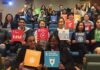
Following the program introductory mapping workshops organized in 2020 and launching the crowdfunding academy in Kazakhstan. Today, the Resilience and Social Development Department (RSD), Islamic Solidarity Fund for Development (ISFD), Astana International Financial Center (AIFC) and Program strategic partner (UNDP) had celebrated its closing ceremony in Kazakhstan, an important journey of finalizing the crowdfunding academy training, partnership with the ultimate objective to improve the socio-economic well-being of the most vulnerable and hard to reach communities in Kazakhstan and IsDB Member Countries.
 27 CSOs participated in the Academy, developed a crowdfunding campaign using e-learning tools and offline training by following a tested program that offers learning materials and presentations, work assignments and guidance from leading crowdfunding experts. In his opening remark, Abdi Abdullahi, the Principal, Social Development Resilience & Social Development, said, “I am delighted to see that the international aggregated platform is known as TADAMON” “Solidarity in Arabic” is indeed an effective vehicle for equipping winners of the crowdfunding academy with tools to benefit from crowdsourcing and crowdfunding”. Khemais El Gazzah Senior Adviser to the ISFD DG said “I’m excited that today you have presented us the outcome of the first batch of CSOs graduating from this capacity building crowdfunding training academy. This means they will campaign on TADAMON and ensure delivering their projects at their local community grass root level. In addition, the IsDB Civil Society Lead (Ahmed Berthe) said, “The successful conclusion of this training is an important milestone on the road to the rest of the CSOs in our 57 MCs. The TADAMON (www.TADAMON.community) Crowdfunding Academy, is an online training program that enables civil society organizations (CSOs) to raise funds using crowdfunding, aims to empower CSOs with know-how on how to finance their projects and ideas in alternative ways, build and grow their community, give their projects more visibility, and engage more partners and donors. The program’s mission comes on the back of a US $10 million seed contribution of the ISFD. It seeks to empower CSOs in IsDB Member Countries to improve the socio-economic well-being of the hard-to-reach communities through refugees’ education, job creation, building resilience, and training, among which the crowdfunding academy and community livelihoods development. The TADAMON Crowdfunding Academy is a part of the IsDB – ISFD NGO Empowerment for Poverty Reduction Program, which is sponsored by the Islamic Solidarity Fund for Development (ISFD), managed by the Islamic Development Bank (IsDB), and implemented by the United Nations Development Programme (UNDP) and other strategic partners. |