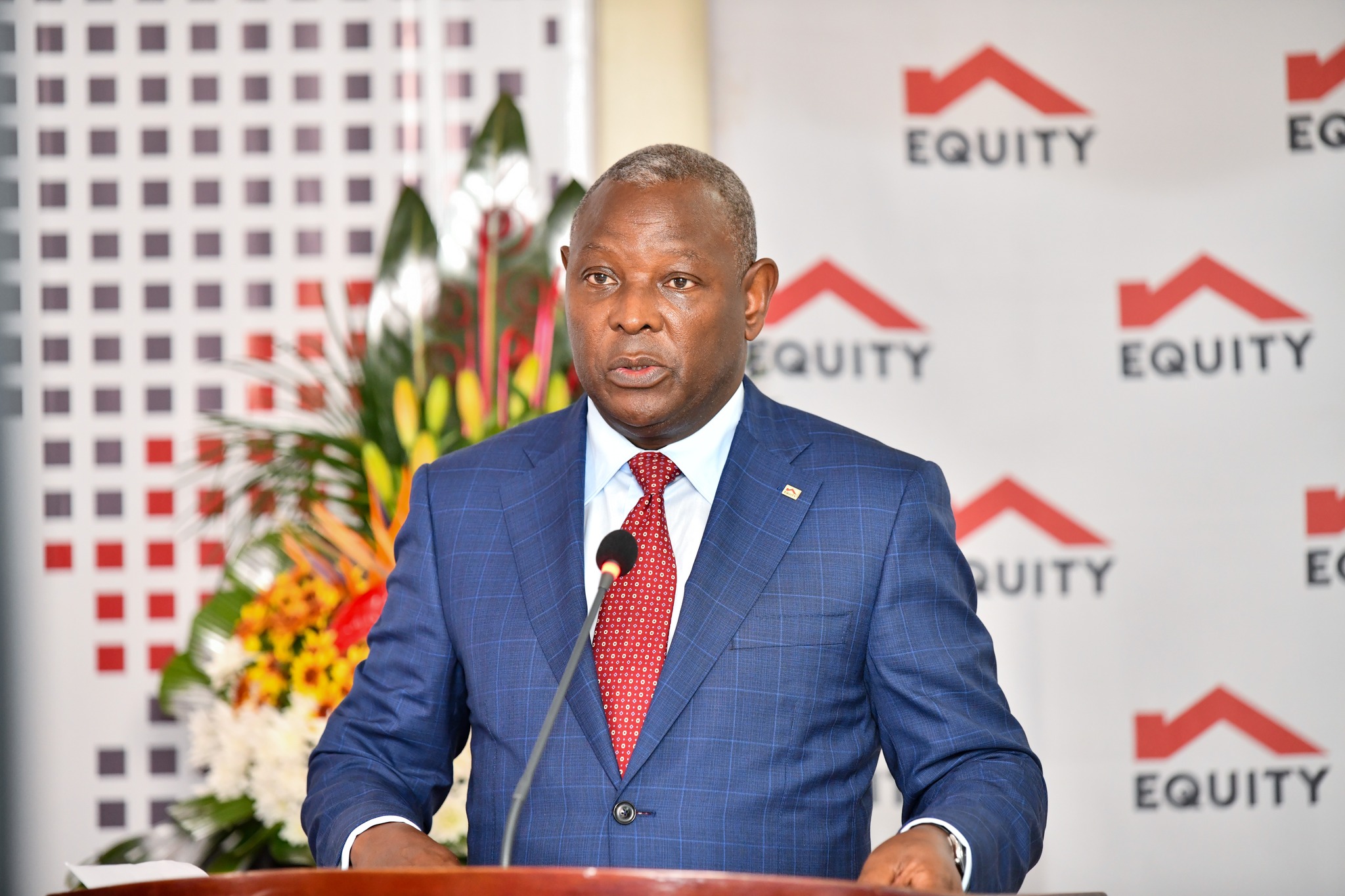

Equity Group Managing Director and CEO Dr. James Mwangi has called for increased social inclusion of refugees in Africa. In his address to the delegates attending the 2nd edition of the Amaharo Refugee Forum in Accra, Ghana, Dr Mwangi called on stakeholders to equitably include refugees in societal processes and create an enabling environment for them to thrive in society.
The rise of internal and cross boarder conflicts across the continent and the world has affected millions of people. While humanitarian agencies and responsible governments have done their best to limit the impact on victims of forceful displacements, strategic and coordinated efforts need to be initiated to protect affected persons. According to the United Nations High Commission for Refugees (UNHCR), more than 108 million persons were forcibly displaced worldwide in 2022 due to persecution, conflict, violence, human rights violations, and disturbances in public order. About 74% of the displaced persons were hosted in low- and middle-income countries.
Dr Mwangi is adamant that the equitable provision of key essential services to refugees across the continent will be crucial in creating opportunities for wealth creation.
“Equity is partnering with UNHCR in line with our purpose which is to transform lives, give dignity and expand opportunities for wealth creation. We have realized that the surest way of integrating refugees with host communities is to build programs for them beyond the social safety net payments. The issue of refugees is too big for individual governments and requires coordinated efforts from the private sector,” said Dr. Mwangi at the Amaharo Refugee Forum.
Within the East Africa region, Equity Bank continues to provide inclusive financial services to thousands of refugees and Forcefully Displaced Persons (FDPs) living in Kenya, Uganda, Rwanda South Sudan and DRC. The bank has been able to sustainably provide a wide range of services to refugees and host communities. The services provided by the bank include; access to savings, credit, payment, insurance and investment opportunities.
Under the bank’s financial inclusion agenda, the bank has been able to support refugees living in some of the biggest refugee camps on the continent – including Kakuma and Daadab refugee camp. The coordination between partners and key stakeholders has seen a deeper penetration of services to refugee communities. This has been key in integrating them more meaningfully in society.
Equity’s key partners in this regard include UNHCR – that has worked closely with the bank to develop mechanisms to enhance recognition of refugees by host countries and IFC to provide risk sharing guarantees.
“We chose to integrate refugees into our banking activities. We are now providing them with savings, provide them with loans, and enhance their capacity through financial training and entrepreneurship. We have worked closely with UNHCR to enhance mechanisms for integration of refugees into society,” added Dr Mwangi
As one of the largest banks on the continent with assets valued at more than Kshs. 1.3 trillion, Equity continues to play a key role in ensuring financial inclusion and social protection on the continent. Fostering integration and social cohesion between refugees and their host communities through social impact investments and livelihood opportunities has been key to promoting self-reliance and economic independence for displaced persons.