
Nutrition Africa Investor Forum (NAIF) is a first-of-a-kind event, hosted by the Global Alliance for Improved Nutrition (GAIN), in partnership with Royal DSM, the SUN Business Network (SBN) and African Business magazine, that aims to position nutrition as a promising new investment area
GENEVA, Switzerland
Over 200 delegates, including dealmakers, entrepreneurs and investors will meet at the Nutrition Africa Investor Forum (NAIF) on October 16-17 – World Food Day — in Nairobi, Kenya, to explore partnerships, access business finance and enter new markets. Over these two days, selected Small and Medium Enterprises (SMEs) from across Africa will have opportunities to participate in the first ever Scaling Up Nutrition Pitch Competition as well as The Nutrition Dealroom to meet venture capitalists and business financiers to improve their access to finance.
NAIF is a first-of-a-kind event, hosted by the Global Alliance for Improved Nutrition (GAIN) (www.GainHealth.org), in partnership with Royal DSM, the SUN Business Network (SBN) and African Business magazine, that aims to position nutrition as a promising new investment area. The event will bring together leaders from commerce, agri-food, development agencies, academia along with investors to share their experiences, present research results, explore collaborations and spark new ideas – all with the aim of developing new projects and attracting investment for high-impact nutrition businesses.
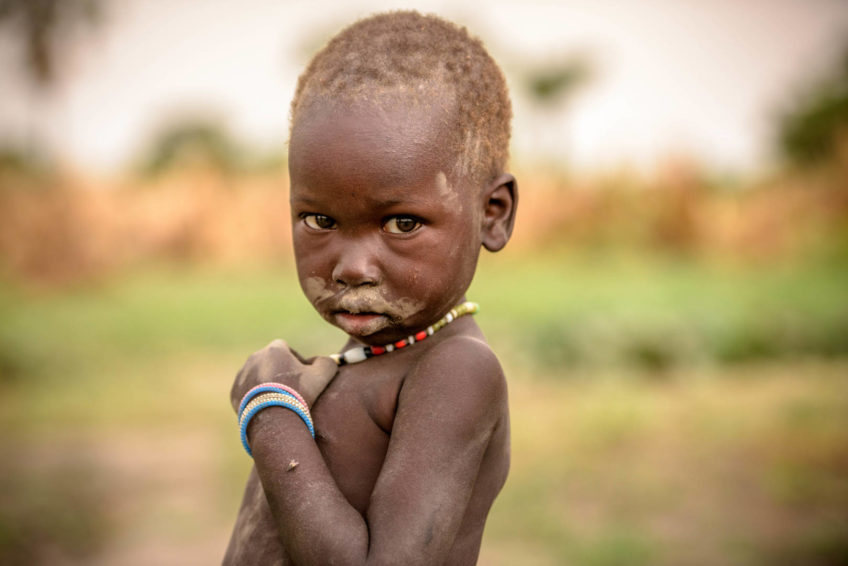
Malnutrition affects millions of children across the world. Africa alone has estimated that 58.7 million children under the age of five are stunted – having a low height for a given age – and 13.8 million who are wasting – low weight for a certain height. There is no doubt that stunted children today will lead to stunted economies tomorrow. In fact, African nations lose (https://bit.ly/2NHLEWS) between 1.9% and 16% of the gross domestic product (GDP) annually to undernutrition due to increased mortality, absenteeism, chronic illnesses, and lost productivity. Governments alone cannot address this issue. Private sector investment is key to tackle this challenge. In fact, the nutrition sector offers tremendous opportunities to businesses.
There is a central role for business in tackling malnutrition in Africa, explains Fokko Wientjes, vice president of nutrition in emerging markets and public-private partnerships at Royal DSM.
“As scaling up nutrition action delivers at least $16 in returns on investment for every $1 spent (https://bit.ly/1vLeJjf), nutrition-sensitive capital investments along the entire food value chain are likely to represent (https://bit.ly/2xE2jk5) a tremendous purpose-driven investment opportunity. We will fundamentally integrate SDG 1 (poverty reduction) with SDG 2 (hunger & nutrition) by producing locally; Africa nourishes Africa.”
Africa’s demographic dividend is also an opportunity, Mr. Wientjes reveals, “There are more than 1 billion people in the current African consumer market. This is expected to increase to more than 2 billion (https://bit.ly/2xRXp2d) by 2050. With 226 million people (https://bit.ly/2eVsjPh) aged between 15 and 25 years, the continent also has the youngest population in the world. This represents enormous potential: a young, growing African consumer market that is more health-conscious, favouring nutritious and healthy foods. Emerging markets are the fastest urbanizing countries in the world. They are moving away from subsistence and smallholder farming and with that separating the producer from the consumer.”
In fact, SMEs, along with smallholder farmers, make up the bulk of the actors in the food system in developing and emerging markets. They play a key role as input suppliers, off-takers, processors, and distributors, which furthermore creates jobs and enhances regional economic growth.
Yet, barriers to accessing finance mean that agri-food SMEs are not achieving their full potential in developing and scaling up market-based solutions that can improve the consumption of safe and nutritious foods.
“We have a great opportunity to close that gap,” explains Dr. Lawrence Haddad, GAIN’s Executive Director, “by creating a sustainable food value chain and working through local agrifood industry SMEs, to ensure that nutritious foods are more accessible, affordable, and aspirational. To help this cause, GAIN has recently launched a Nutritious Foods Financing Program (https://bit.ly/2ObH8PK), which aims to build and maintain an investable pipeline of opportunities among agrifood SMEs, linking this to investors, leveraging blended finance options to help de-risk private investments, and providing technical assistance to investees”.
The Forum will also be host to two engagement channels to facilitate partnerships between high-impact nutrition businesses and venture capitalists and financers:
The Nutrition Dealroom will bring investors face-to-face with established small and medium growing businesses. This transaction and deal-making platform will showcase Africa’s fastest-growing enterprises working to improve nutrition in a sustainable and scalable way and aims to achieve tangible results by matching a curated portfolio of investment-ready companies with private sector investors.
The first Africa edition of the Scaling Up Nutrition Pitch Competition, will be launched. Organised by the Scaling Up Nutrition Business Network (SBN), an initiative of GAIN and the UN World Food Program (WFP), plus local partners, the competition aims to showcase investment opportunities presented by SMEs working to improve access to nutritious food. Out of more than 450 outstanding entries, 21 SMEs have been shortlisted from national pitch competitions in Nigeria, Tanzania, Mozambique, Malawi, Ethiopia, Kenya and Zambia. Each entrepreneur will pitch their innovative nutritional investment opportunities to a panel of influential judges. The judges will select the overall winner who will be awarded with the title of SBN Nutrition Champion, which includes a travel and technical assistance prize. In addition, other top performing finalists stand a chance to win cash and technical assistance awards generously contributed by partners.
“Through years of experience working with African partners and governments, I am convinced that if we grow and support high impact businesses in food systems in Africa, we will be able to make inroads to reducing malnutrition,” concludes Dr. Haddad, “The potential is huge if we can get the investment recipe right”.










![Canon makes history with 170 Million lenses milestone Canon’s RF/EF lens production exceeds 170 million units, extending its world record in interchangeable lens production Both EF and RF lenses have gained strong support from a wide range of users—from beginners to professionals—leading to steady growth in production volume Canon Inc. announced that, in October 2025, Canon reached a historic milestone of producing a cumulative total of 170 million RF and EF interchangeable lenses for its EOS series, extending its world record for the highest number of interchangeable camera lenses ever produced. The EF lens was introduced in 1987 as the dedicated lens system for Canon’s EOS autofocus single-lens reflex film camera, debuting simultaneously with the EOS system itself. Since their inception, EF lenses have led the industry by incorporating a series of world-first technologies, including the Ultrasonic Motor (USM), Image Stabilizer (IS) technology, and a multilayered Diffractive Optical (DO) element, and have undergone numerous evolutions. In 2018, Canon launched the RF lens series, designed for the EOS R mirrorless camera system, which features a large aperture, short back focus, and high-speed communication system to deliver even higher image quality. The RF and EF lens series lineup now includes a total of 108 models , covering a wide range of focal lengths from ultra-wide 10mm to super-telephoto 1200mm. The series also includes the world’s first VR lens lenses with built-in power zoom suited for video shooting, and even those compatible with power zoom adapters—expanding the scope of creative expression and meeting the diverse needs of users for both still photography and video. EF lens production began at Canon’s Utsunomiya Plant in 1987. Since then, both EF and RF lenses have gained strong support from a wide range of users—from beginners to professionals—leading to steady growth in production volume. Today, Canon manufactures lenses at five sites: Utsunomiya Plant; Canon Inc., Taiwan; Canon Opto (Malaysia) Sdn. Bhd.; Oita Canon Inc.; and Miyazaki Canon Inc. Milestones include 10 million units produced by 1995 and 50 million by 2009. Then in 2014, Canon became the first company in the world to reach 100 million interchangeable camera lenses produced. In October 2025, the company reached 170 million units, leading to the achievement of this world record. The 170 millionth lens produced was the RF 70-200mm F2.8 L IS USM Z. Canon has maintained the No.1 global market share for digital interchangeable-lens cameras for 22 consecutive years since 2003. Moving forward, Canon will continue to refine its proprietary imaging technologies and further strengthen and expand its lens lineup, pioneering new imaging possibilities and contributing to the continued evolution of photographic and video culture. Highlights in the development of the RF/EF Lens Series The EF lens, which was introduced alongside EOS in March 1987, has adopted a variety of world-first technologies, including Image Stabilizer (IS) technology, featured in the EF 75-300mm f/4-5.6 IS USM released in 1995; a multilayered Diffractive Optical (DO) element, used in the EF 400mm f/4 DO IS USM launched in 2001; and Subwavelength Structure Coating (SWC) [7], applied to the EF 24mm f/1.4L II USM released in 2008. In 2021, Canon launched the EOS VR System, a VR video system consisting of a mirrorless camera [8], dedicated lens, and PC software, thereby creating a 3D 180° VR video through an interchangeable lens camera. In 2024, Canon began rolling out a new series of hybrid lenses equipped with iris rings, designed to meet the needs of both still photography and professional video production. For zoom lenses, the company has also launched RF 24-105mm F2.8 L IS USM Z and RF 70-200mm F2.8 L IS USM Z which are compatible with power zoom adapters. For single focus lenses, the company released F1.4 L hybrid prime lens series that unified the size and ring and button position across models. In September 2025, Canon launched RF 85mm F1.4 L VCM, the fifth model in this series, demonstrating that it can meet demands in line with the changing times. [1] Includes EF, EF-S, EF-M, EF Cinema, RF, RF-S, and RF Cinema lenses and extenders. As of October 21, 2025 (according to a survey by Canon) [2] Among SLR cameras (according to a survey by Canon) [3] Number of products sold as of October 22, 2025 (including extenders). The number of lens models for sale is different according to market figures. [4] Focal length is 5.2mm to 1200mm when including VR lenses [5] An interchangeable digital camera lens that enables VR footage with a single camera. Among interchangeable lens digital cameras released as of October 5, 2021 (according to a survey by Canon) [6] Refers to unit share (according to a survey by Canon) [7] A special coating with advanced anti-reflective properties [8] For applicable cameras, please visit the official Canon website *Release dates in this document refer to dates in Japan. Canon Central and North Africa (CCNA) is a division within Canon Middle East FZ LLC (CME), a subsidiary of Canon Europe. The formation of CCNA in 2016 was a strategic step that aimed to enhance Canon’s business within the Africa region - by strengthening Canon’s in-country presence and focus. CCNA also demonstrates Canon’s commitment to operating closer to its customers and meeting their demands in the rapidly evolving African market. Canon has been represented in the African continent for more than 15 years through distributors and partners that have successfully built a solid customer base in the region. CCNA ensures the provision of high quality, technologically advanced products that meet the requirements of Africa’s rapidly evolving marketplace. With over 100 employees, CCNA manages sales and marketing activities across 44 countries in Africa. Canon’s corporate philosophy is Kyosei – ‘living and working together for the common good’. CCNA pursues sustainable business growth, focusing on reducing its own environmental impact and supporting customers to reduce theirs using Canon’s products, solutions and services. At Canon, we are pioneers, constantly redefining the world of imaging for the greater good. Through our technology and our spirit of innovation, we push the bounds of what is possible – helping us to see our world in ways we never have before. We help bring creativity to life, one image at a time. Because when we can see our world, we can transform it for the better.](https://businessinsights.africa/wp-content/uploads/2026/05/1.-Canon-EOS-R50-Mirrorless-Camera-for-Beginners-1024x764-1-100x70.jpg)