



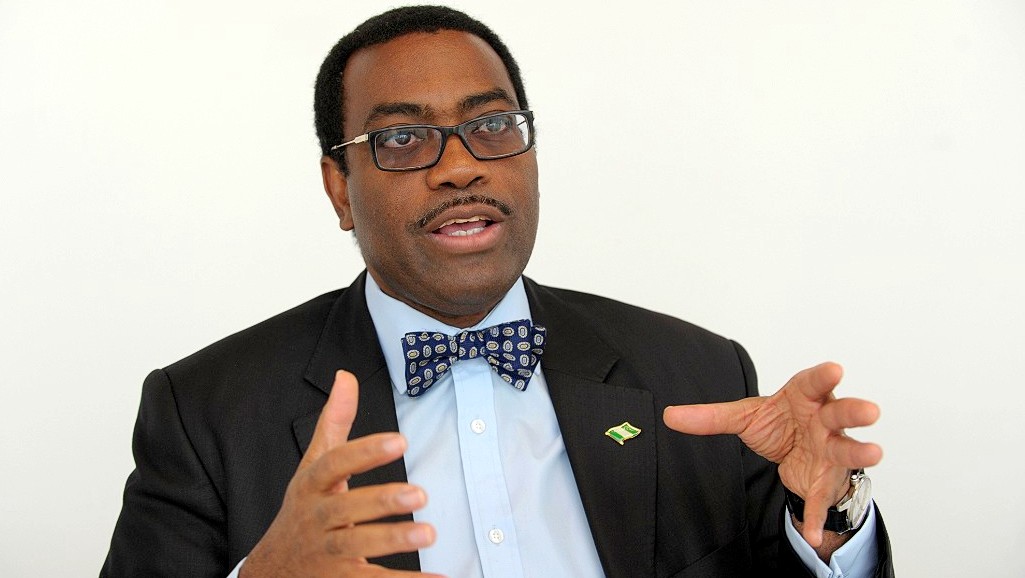

The African Development Bank has emerged as a leader among its peers and a powerful voice within the multilateral development community
The African Development Bank (www.AfDB.org) has kicked off activities to celebrate 60 years of its transformative impact on Africa’s development.
Since September 1964 when representatives of 25 African countries gathered in Khartoum, Sudan, to agree on the vision for a bank to drive economic development across Africa, it has been a journey of resilience and passion, including a fair share of bumps and bruises.
Georges Rigobert Aithnard, the Bank’s oldest retiree, captivated attendees at the 60th anniversary commemoration event on Monday 09 September, with his account of the challenges faced by the then-fledgling institution. Speaking as part of a staff panel discussion, the 89-year-old offered unique insights into the Bank’s formative years.
From his role in 1965 as Personal Assistant to the first President of the Bank, to his retirement as Director of the African Development Institute of the Bank in 1995, Aithnard showed deep enthusiasm for his work and a strong belief in the future of the Bank.
He recalled a time when the Bank president struggled to secure a meeting with the vice president of a sister multilateral development bank.
That has since changed, he told the audience of past and present Bank staff, partners, and senior government officials. He affirmed that the African Development Bank has emerged as a leader among its peers and a powerful voice within the multilateral development community.
“When I joined the African Development Bank in 1965, the Bank was much more modest than it is today. There has been robust progress over the years,” Aithnard said. “Despite the fears and challenges the Bank faced then, it confronted problems head-on, secured global ratings, and continued to increase its capital. Today, we are delighted that the Bank has overcome its fears to become a global development institution with influence beyond Africa.”
He encouraged the Bank’s staff and management to continue to work hard, make sacrifices, and believe that the institution can make a greater difference in African countries. “Once knocking on others’ doors, the Bank now finds others knocking on its own. The success of the Bank should be an incentive to the staff,” he added.
Dr. Victor Oladokun, Senior Advisor on Communication and Stakeholder Engagement to the President of the African Development Bank Group moderated the discussion, which featured staff representing various levels of the Bank’s structure.
The Bank’s Director General, East Africa Regional Development and Business Delivery Office, Nnenna Nwabufo, described the institution as Africa’s partner of choice.
“The Bank is at the centre of the conversation on Africa’s development. It has become Africa’s partner of choice. When African countries want to discuss development, they come to the African Development Bank because it has become a trusted partner,” she said.
She shared the example of the Bank’s work in fragile states, where it continues to have an impact despite obvious challenges. “In our work with fragile states, we don’t see the challenges, we see opportunities.”
Nwabufo joined the Bank’s Treasury Department in 1991 and has held increasingly senior positions, rising to become a director general in January 2021.
Jerome Berndt joined the African Development Bank as a Young Professional (http://apo-opa.co/3Toueyn) in 2016. He has since progressed to become a Principal Fragility and Resilience Officer in the Transition States Coordination Office.
“The learning and friendships I experienced at the Bank over the years have been the greatest inspiration of my career,” Berndt said.
He praised the strong work and contributions of the Bank’s staff and acknowledged the crucial support of partners. “Some of the Bank’s unsung heroes are the young professionals,” he noted.
Joséphine Sallah Ayari, speaking on behalf of the General Services Staff, and Hannatou Mamane, representing the Short-term Staff, also reflected on their work at the Bank, highlighting the changes initiated by the Bank’s President, Dr Akinwumi Adesina, to support staff progress.
Ayari highlighted how the Bank has overcome many challenges to become a resilient institution where staff are proud to work.
Summing up her thoughts, Mamane said: “We have to be optimistic. We have an optimistic President who has worked very hard to put the Bank at the heart of Africa’s development. As staff, we have a duty to work even harder. “












![The signing ceremony took place in Kisumu, with Governor Prof. Anyang’ Nyong’o representing the county government and UN-Habitat Executive Director in Kenya, Anaclaudia Rossbach, signing on behalf of the UN agency. Under the agreement, both parties commit to jointly implementing the housing upgrade project, which Governor Nyong’o said will primarily target vulnerable groups. “The PINUA programme [is] designed to benefit the most vulnerable members of the community,” Nyong’o said, reaffirming his administration’s commitment to fostering sustainable neighborhoods equipped with essential services. Beginning November 1, 2025, the county government, working with UN-Habitat, will launch pilot projects in Kibuye Estate and Muhoroni Sub-County, based on designs and models developed through extensive public participation. The programme will focus on upgrading informal settlements by providing essential social infrastructure such as schools, sanitation facilities, affordable rental housing, early childhood development centres, and public open spaces. It also supports incremental housing models, allowing families to progressively build and eventually own decent homes. Rossbach emphasized UN-Habitat’s global commitment to driving transformative change in urban areas: “This partnership is crucial in advancing our new strategy, which focuses on improving housing access and digitally transforming informal settlements for everyone.” According to UN-Habitat housing architect Fred Omenya, the pilot phase will begin in January 2026 with the construction of two blocks of 24 housing units in Kibuye Estate.](https://businessinsights.africa/wp-content/uploads/2025/10/About-us-still-25957706200_7ca2db7e5e_k-100x70.jpg "Kisumu, UN-Habitat sign Ksh2.7bn deal for social housing upgrade")
