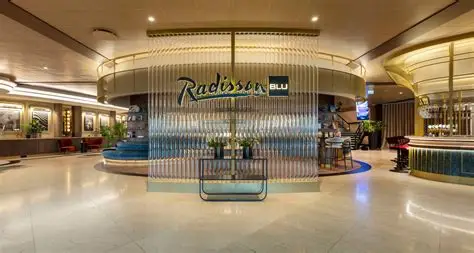
Radisson Hotel Group (RHG) is helping drive a new era in healthcare meeting planning, contributing to the industry’s evolution from operational event delivery to a structured, strategic discipline focused on improving scientific exchange, decision-making, and healthcare outcomes.
The findings emerge from the Radisson Hotel Group Knowledge Exchange: Healthcare Planning, Design and Strategy Summit held in Florence, Italy, where 75 experts from across the pharmaceutical, healthcare agency, and venue production sectors came together to explore the future of healthcare meeting design. Built to drive tangible outcomes, the two-day summit centered on collaborative working sessions and practical workshops that translated industry insights into actionable frameworks, rather than a traditional conference format.
The resulting report identifies a clear industry shift: healthcare meetings are increasingly being recognized not as standalone events, but as strategic communication systems that require structured design, measurable methodologies, and continuous improvement.
“Healthcare meetings are no longer simply logistical exercises—they are strategic communication platforms that can drive measurable educational, scientific, and organizational outcomes,” said Muriel Poulenc, Senior Director, Sales Strategy at Radisson Hotel Group. “Across the industry, we are seeing growing recognition that better outcomes require more than flawless execution. They require structured design, integrated workflows, and a more deliberate approach to how meetings are planned, delivered, and measured. The organizations embracing this shift will be best positioned to create meaningful impact.”
Healthcare meeting design is becoming a discipline
A central theme emerging from the Florence summit is the growing professionalization of healthcare meeting planning. As regulatory requirements, stakeholder expectations, and organizational complexity continue to increase, the industry is moving toward shared methodologies, frameworks, and measurement systems that support more consistent and effective outcomes.
Building on discussions first initiated at the 2025 Knowledge Exchange, participants worked to translate industry insight into practical, repeatable tools designed to improve meeting effectiveness, compliance, and stakeholder engagement. The report argues that healthcare meetings should no longer be viewed as isolated events, but as intentionally designed systems that support learning, collaboration, and decision-making across the healthcare ecosystem.
The healthcare meeting planner is becoming a decision architect
As healthcare meetings become more complex, the role of the planner is evolving beyond coordination and logistics. The report highlights the emergence of meeting planners as strategic decision architects, responsible for aligning stakeholders, structuring workflows, and helping organizations make better decisions throughout the planning lifecycle.
Workshop discussions revealed that many organizational challenges, including delays, inefficiencies, and rework, are often the result of fragmented decision-making rather than execution shortcomings. Participants concluded that better meetings depend on better decision structures, greater alignment, and earlier strategic involvement from planners.
AI won’t fix healthcare meetings. Better systems will
While artificial intelligence (AI) continues to dominate industry conversations, the Florence summit challenged the assumption that technology alone will solve healthcare meeting challenges. According to discussions and data presented during the summit, while AI adoption across the industry is high, relatively few organizations are achieving its full value. Participants agreed that the real challenge is not technology adoption, but the integration of AI into coherent workflows, governance models, and decision-making systems.
The report identifies fragmented processes, disconnected workflows, and inconsistent planning structures as some of the industry’s most significant barriers to progress. In many organizations, as much as 40–60% of planning activity remains focused on non-value-creating work.
To address these challenges, RHG advocates for the adoption of structured methodologies, including Lean Six Sigma, Agile, and Sprint thinking, to redesign healthcare meeting planning around flow, efficiency, and measurable outcomes.
Build. Measure. Learn.
One of the report’s key contributions is the introduction and exploration of the Meeting Flow Efficiency Ratio (MFER), a framework designed to measure the balance between value-creating activity and reactive planning effort. The model demonstrates how organizations can increase productive planning time by improving workflow design, reducing friction, and creating greater alignment across teams and stakeholders.
The report also reinforces the need to move beyond one-off event thinking toward a continuous engagement model. This evolution is particularly important given the report’s finding that 66% of healthcare professionals change their clinical practice or prescribing behavior following participation in industry-sponsored symposia, highlighting the significant influence healthcare meetings can have on professional decision-making and patient outcomes.
An industry ready to evolve
A panel featuring senior leaders from Inizio Engage XD, MCI, Emota, and Open Audience reinforced the report’s conclusions.
Drawing on longitudinal industry data spanning 2018 to 2026, the panel identified a common challenge: not structural failure, but structural inertia. While participation remains strong and investment continues, many traditional meeting formats have failed to evolve alongside changing expectations and technological capabilities.
The report concludes that the future of healthcare meetings will belong to organizations that combine methodology, intelligent orchestration, and strategic design to create more impactful, measurable, and scalable engagement.
By combining sector expertise, collaborative industry engagement and methodology-driven approaches, Radisson Hotel Group continues to support the advancement of healthcare meeting design and contribute to the ongoing development of the discipline globally.

![How LG’s ‘Make Life Good’ turned an orphanage’s two-plate stove into a full kitchen For years, a Johannesburg school's soccer coach did the entire team's laundry himself. Several evenings a week he and the teachers carried the kit home, washed and dried it, and brought it back so the squad had something clean to train in. Their changing room was a bare space with one toilet, a broken mirror and nowhere to store a thing. There was no shortage of talent or commitment – the surroundings just held it all back. Until very recently, this was the reality at Kensington Secondary School. With the help of LG Electronics South Africa (https://apo-opa.co/4eQr5B2), the achiever who chose to fix it was Williams Okpara, the Nigerian goalkeeper who spent more than a decade guarding Orlando Pirates' posts and still holds the club's appearance record. His episode opens Make Life Good, LG's six-part reality series made in partnership with MultiChoice, a Canal+ company, and hosted by Jessica Nkosi. It has aired on Mzansi Magic every Thursday at 19:00 since 11 June, with repeats on Saturdays at 14:00 and Sundays at 09:30. The premise is rare for reality television. No prizes or eliminations, no scandals or tempers boiling over. Instead, six change-makers – or as they are affectionately known by LG as ‘Achievers’ – each return to a cause they already back, and the build teams get 24 hours to remake a space that shapes the people who use it. What connects them is geography as much as generosity: the Achievers come from across the continent, from South Africa, Nigeria and Kenya, yet every organisation they chose sits in a South African community close to their hearts and in need of support. In Lanseria, that community is a safe home and orphanage for babies and young children called LIV Lanseria, backed by Saray Khumalo, the South African mountaineer who became the first Black African woman to summit Everest. Her makeover turned a room with a single two-plate stove into a fully-fledged, working kitchen. A 900 L fridge now holds food for the whole home. A dishwasher returns the hours volunteers used to lose at the sink. A microwave warms a bottle evenly, without the cold spots that catch out a tired caregiver. The appliances follow the problem, which is the guiding principle in bringing together the Achievers, LG and Multichoice to make a difference by using their specialities. The pattern holds at a skills programme for unemployed men, where a small projector gave way to a 100-inch smart display that now runs learning demonstrations and its written theory side by side, as well as an energy-efficient air conditioner that keeps a packed training room usable through the afternoon. In a country that plans its weeks around the unpredictable availability of service delivery, that efficiency is what lets a stretched organisation keep the equipment running once the cameras leave. "Life's Good is our slogan, but this series asks us to prove it where life isn't always easy or fair," says Pennileigh Naidu, Head of Corporate Marketing and PR at LG Electronics South Africa. She frames it as a deliberate move away from product-led marketing. "We didn't want to talk about impact, we wanted to show it. For every organisation, we started with the operational problem they live with daily, then chose the technology that removes it." Her measure of success, she emphasises, is the hours a caregiver gets back and the dignity a working kitchen restores. That is the shift worth a marketer's or a technologist's attention. Corporate social investment has tended to sit off to the side of the business, a cheque written and a photograph taken. Make Life Good folds the impact into the brand and invites the harder question of whether the fridge is still working, and still useful, a year from now. Naidu calls it shared value rather than charity, the point where commercial capability and social relevance stop competing for the same budget. The series reaches viewers in Kenya and Nigeria too, and sits within LG's wider regional storytelling, gathered in its newsroom feature "Beyond the Product". This season, though, the work was South African, room-by-room and need-by-need. The crews have now packed up, and the Achievers have started their work on making changes with more communities. What stays behind in a Lanseria kitchen and a Kensington changing room is quieter and more durable: kit dried overnight, meals prepped faster, an afternoon lesson a full class can finally see. None of it will trend, but all of it will still be working when the next intake of children arrives. Make Life Good – the Achievers and their causes Williams Okpara (Nigeria) – Kensington Secondary School soccer programme, Johannesburg Former Orlando Pirates goalkeeper who holds the club's appearance record and was part of the 1995 CAF Champions League-winning team, and is now Pirates' team manager. Products: 13Kg Front Loader with AI DD™ & Steam+™ in Black Finish (https://apo-opa.co/4wpZzSf); 10kg A+++ Dual Inverter Heat Pump Dryer in Black Finish (https://apo-opa.co/3QEJSrj); LG XBOOM Stage 301 by will.i.am Bluetooth Speaker (http://apo-opa.co/4aG3IsW). Saray Khumalo (South Africa) – LIV Lanseria children's home, Lanseria The first Black African woman to summit Mount Everest and to ski to the South Pole, and founder of the Summits With a Purpose foundation, which raises funds to build libraries in disadvantaged schools. Products: 900L InstaView™ Door-in-Door French Door Fridge with UVnano™ in Black Finish (https://apo-opa.co/3SKr5eF); 42L NeoChef™ Grill Microwave Oven in Stainless Finish (https://apo-opa.co/4f4TweN); 14 Place QuadWash™ Dishwasher with TrueSteam™ in Stainless Finish (https://apo-opa.co/4f4Twvj). Adze Ugah (Nigeria) – Bold Men Skills Program / BBM Foundation Nigerian-born, Johannesburg-based filmmaker, one of the directors of Shaka iLembe, whose feature Sierra's Gold won Best South African Feature Film at the 2024 Durban International Film Festival. Products: 100 inch LG QNED evo AI QNED86 MiniLED 4K 120Hz Smart TV (https://apo-opa.co/4bt52j0); 9.1.5 ch LG Home Cinema Soundbar with Surround Sound and Rear Speakers S95TR (https://apo-opa.co/4wmHX9H); [Wifi] 24k BTU DualCool+ Inverter (https://apo-opa.co/4wt1WDP). Esther Munyi (Kenya) – Botshabelo Babies Home, Midrand Kenyan data and analytics leader, founder of Charmed by Data and former Group Chief Data and Analytics Officer at Sasfin. Products: 900L InstaView™ Door-in-Door French Door Fridge with UVnano™ in Black Finish (https://apo-opa.co/3SKr5eF); 42L NeoChef™ Grill Microwave Oven in Stainless Finish (https://apo-opa.co/4f4TweN); 13Kg Front Loader with AI DD™ & Steam+™ in Black Finish (https://apo-opa.co/4wpZzSf). Thandi Mavata (South Africa) – The House Group, Johannesburg South African entrepreneur, author and women's-empowerment advocate, and founder of the Doek on Fleek movement. Products: 77 inch LG OLED evo AI G5 4K 165Hz Smart TV (https://apo-opa.co/4eUHWTq); [Wifi] 24k BTU DualCool+ Inverter (https://apo-opa.co/4wt1WDP) air conditioner; 3x LG UltraFine 27" QHD IPS Monitor with USB-C (https://apo-opa.co/4buggnp). Perpetual Kendi (Kenya) – Moses Molelekwa Arts Foundation, Tembisa Kenyan Pan-African entrepreneur and communications strategist, founder and CEO of Addleston PR and of the Laute Luxury Wines brand. Products: 65 inch LG QNED evo AI QNED86 MiniLED 4K 120Hz Smart TV (https://apo-opa.co/3QYRg0v); LG MR11 2300W, 4.2Ch AV Receiver System (https://apo-opa.co/4brSdW9).](https://businessinsights.africa/wp-content/uploads/2026/07/OIP-81-218x150.webp)