Home Blog Page 5
In the bustling Tushauriane area of Kayole, Embakasi, St. Patrick’s hospital is like an oasis in a desert. The level four hospital attends to thousands of patients in the densely populated Eastlands area. For the last 13 years, Ann Maina, the director and founder of the facility, has aspired to provide only the highest quality of care. Although the facility is widely known for its efficient services, it stands out when it comes to maternity care. From the onset, maternity care has always been dear to Mrs. Maina, a nurse. This was cemented into her heart after coming across debilitating and nerve-wracking experiences when she worked as a nurse in one of the local government hospitals. “The experience really left a bad taste in my mouth. I remember one time working in the maternity department, I witnessed nurses beating up an expectant mother in the delivery room. It was a heartbreaking moment for me and I really didn’t want to be part of that,” she recalls. Early in her career, she says she knew there was a way that mothers could deliver babies in a conducive environment, while receiving the best of care. “I felt that mothers should not suffer.” This prompted her to start a maternity home in her rented one-bedroom house, where she could afford mothers the best care she envisaged. For a start, she had a blood pressure monitoring machine, an examination bed and a drug cabinet. Her plan worked. Within a short time, more mothers visited her house, ready to deliver. “At one point, I had three expectant mothers coming to my house seeking assistance as they were ready for delivery. I handled them expertly. As others waited on the couch, I took in the first mother and she had a safe delivery. Within a short time, I ushered the rest into the delivery room and everything went well,” she shares. After making porridge for them, she discharged them after four hours. “Mothers need respect when giving birth. They need to be handled well.” With a vision, she realized that she was meeting a critical need in her society. Having tested the waters, she knew what needed to be done. “My patients needed to sleep on white sheets and pillows and once they have delivered, they need to be wheeled to their beds, be supported together with their babies, with lots of respect,” Naturally, expansion was in her mind, but there was a big problem; she had no money to expand. “I wanted to expand, but banks couldn’t give me money. Luckily, I had a Merry Go Round Chama that gave me some cash to expand.” Even with the cash injection from her Chama, she quickly found out that she couldn’t do more, especially when it comes to equipping a maternity unit. Seeing the potential of her dream, she decided to make a leap of faith and sold her house. With the proceeds, she then bought land and built structures at the current location. “I build the outpatients and the maternity section before the money ran out.” Despite the meager resources, Ann was motivated to keep going. At that point when she was starting out, she says she drew her motivation from the then president, Mwai Kibaki whose rallying call was to create over 500 000 jobs every year. “ I felt like the former president was talking to me directly, asking me to create jobs. With that I just went out and hired my first batch of professionals, including nurses, clinicians and doctors to help me run the show.” She remembers that the government of the day had made the business environment conducive, enabling businesses to make money. “Money became available to businesses through affordable bank loans”. What followed was a growth spurt that saw the business grow exponentially. Since its inception in 2012, St Patrick’s Hospital has become a household name in Kayole and environs. So phenomenal has been the growth that it has spawned a new branch. “As part of our expansion, we were able to buy land in Kenol, Muranga county and build and equip a fully fledged hospital, serving many people in the environs.” Mrs Maina attributes the hospitals' growth to sheer hard-work and determination. She appreciastes the fact that her husband joined and supported her to run the facility. “He could help from day one when I had to rush a patient to another facility in an ambulance. He was also instrumental in designing and building our facility.” Firstly, she says the hospital obtained favor from the locals, who patronized it. Secondly, the partnership with SafeCare, an international quality assurance and standards organization was a game changer. Once they joined SafeCare in 2012, Mrs Maina and her team were signed up for business and quality management training to improve their skills. The first step is assessment, which was an eye-opener for Mrs Maina. SafeCare found out that Ann and her team were not running the facility the right way. “We had no administration office, no systems. SafeCare helped them isolate the gaps and set in motion interventions in a bid to improve themselves. With this, they were able to streamline their record keeping, have audited accounts and a digitalized patient history. Next to identifying gaps, SafeCare provided St. Patrick’s hospital with practical tools, solutions and technical support, including access to finance. After the SafeCare intervention, Mrs Maina says her facility was able to obtain the first loan from Medical Credit Fund under the PharmAccess umbrella. It’s this experience that opened the doors for her to get credit from other institutions. She says that the impact of SafeCare was felt almost instantaneously. Shortly afterward, her facility was able to attract all the big insurers, as well as NHIF, a move that brought in many patients. “When the National Hospital Insurance Fund (NHIF) used to visit us for an evaluation, we never knew what they were looking for, and we didn’t know how to improve. After we started SafeCare and the NHIF visited us again, it was a whole new story’’. St. Patrick became NHIF accredited, ensuring a bigger client and income flow. Patient visits have risen from almost 600 to more than 2000 a month, especially now that they have also managed to contract corporate clients and private medical insurance companies. There’s no doubt that SafeCare has helped Ann to reposition her facility and increase its market value. Safecare also helped Ann and her team to mitigate risks in the workplace, especially by embracing handwashing and separating waste in color-coded bins. For Ann, running the hospital is not just a passionate endeavor, but one that should impact society. This explains why her facility hosts health campaigns to educate the community about hygiene. Safecare has certified the facility as a Level 4 but Mrs Maina is eager to go for the highest certification as well as be ISO-certified. “We have come a long way, and we are going far. Our aim now is to continue offering the highest quality of care to all patients, with dignity and respect.”
In the bustling Tushauriane area of Kayole, Embakasi, St. Patrick’s hospital is like an oasis in a desert. The level four hospital attends to thousands of patients in the densely populated Eastlands area. For the last 13 years, Ann Maina, the director and founder of the facility, has aspired to provide only the highest quality of care....

In the fertile plains of Mwea, Kirinyaga County, where endless rice paddies stretch beneath the gaze of Mount Kenya, Nice Digital City stands out like a beacon. Now a favorite stopover for Embu and Meru bound travelers, the city offers exquisite fine dining and entertainment facilities. The miles of rice paddies on both sides of the road is a feast for the eye. The endless green is only interrupted by human settlement and shopping centers. Nice digital city is not your usual shopping mall. It is more. You enter through the Shell petrol station where charming attendants will tenderly welcome and guide guests to where their needs will be met. Principally, it is a stopover joint for food and refreshments. But there is more. You will fuel your car, shop, eat, sleep, relax, let your kids roll and much more. Apart from Muammar Gaddafi and his female bodyguards, I do not know who else is as big on women empowerment like Nice Digital City. The waitresses and pump attendants are mostly women. In terms of customer experience Nice Digital City is as good as any five-star hotel in Nairobi. The focus is on speed, convenience and quality. You are served within two seconds of sitting down. The food itself is the stuff made for kings. There is this focus on cleanliness that goes beyond staff uniform to the restaurants themselves all the way to the restrooms where plenty of water and soap is their middle name. Nice Digital City is a bonanza for someone keen on the story of rural development and how enterprises are scaled up. With the rice economy at the center, Nice Digital City has become our best version of what Americans call motels. From a mere swamp to a shopping and entertainment village, Nice Digital City can be fashioned as a tourist stop for the development of local tourism around the Mount Kenya Circuit. It’s a product of one man’s ambition and vision to transform not just his own life but an entire community. Njiru Mkombozi, the founder of Nice Rice Millers and Nice Digital City rose from a struggling farmer to a leading agripreneur, proving that determination and innovation can turn even the humblest crop into gold. Njiru is a battle-hardened entrepreneur, having been in the trenches for long before finally striking gold. He says he tried his hand in eight failed ventures before finally succeeding. He started out in the 80’s when he was employed as a tailor. He later quit his job to try farming. He grew tomatoes and french beans on a 10-acre piece of land in Karaba village. With meagre earnings, he quit the farming venture and focused on selling second hand clothes, a business venture that only lasted for two months. With some savings, he then ventured into the agrochemicals industry by launching an agrovet that supplied pesticides to farmers. This business did not survive, thanks to what he terms as cut throat competition. Njiru would later venture into the Matatu industry, supply of construction materials and sand transport business before trying his hand in a brewery, which opened the way for his breakthrough. Once he had set up the brewery business, he failed to secure a license. Not one to give up, he converted the facility into a maize milling factory. With not enough rains, maize was doing badly in the area. However, he noticed that one crop was always thriving-rice. And farmers were having surplus harvests. Seeing a big gap, he converted his maize milling business into a rice miller and as they say, the rest is history. “Farmers were waiting for three months to have their rice milled at government-owned mills,” he said. Njiru was born into a family of small-scale rice farmers in Karaba village in Kirinyaga county. Like many in the region, his parents toiled under the sun, harvesting rice that middlemen bought at meager prices. After completing secondary school, Njiru took up farming but quickly realized that without value addition, farmers would always remain poor. When he finally had established his on rice mill, e as keen to uplift local farmers. Rice farmers could take their rice to him for milling, and before long, he was the go-to miller in the area. As rice milling gained traction, Mwea was fast becoming a stop over town for travelers willing to buy rice. Again, Njiru saw the opportunity to cash in and constructed a mall. Today, Nice Digital City is a haven for travelers. The property rests on 8 acres of land and is a major attraction to locals and travelers. Njiru's business empire comprises Nice Digital City, Nice Rice Mills, Nice Charcoal, Nice Mineral Water, Nice Bakeries and Nice Jikos. Nice Digital City has a supermarket, a 75-bed hotel, swimming pool, chemist and gardens, among other amenities. He says that visitors can freely use the gardens as long as they spend on food and drinks at the hotel. His business empire has over 80 permanent staff and about 5,000 others indirectly through transport and retail. Having made an impact, Njiru says he’s not yet done. He dreams of taking the Nice rice brand to every county through his wagons, an endeavor that’s already turning into a success.
By George Marenya In the fertile plains of Mwea, Kirinyaga County, where endless rice paddies stretch beneath the gaze of Mount Kenya, Nice Digital City stands out like a beacon. Now a favorite stopover for Embu and Meru bound travelers, the city offers exquisite fine dining and...

In the heart of Nairobi’s Kariokor neighborhood, Starehe Boys’ center and School ishard to miss. It’s an academic giant and a landmark. Founded in 1959 by Dr. GeoffreyGriffin, Mr. Joseph Kamiru Gikubu and Mr.Geoffrey Gatama Geturo, the school haslived upto its billing of being a citadel of knowledge for bright but economicallydisadvantaged students. Under the stewardship of...

By Amos Wachira As we navigate an era of economic uncertainty and widening inequality, microfinance continues to stand as a beacon of hope for millions around the world. This issue of Business insights Africa Magazine delves into the transformative power of small-scale financial services, showcasing how access to credit, savings, and insurance can uplift individuals, families, and entire communities. Microfinance is more than just loans—it’s a tool for empowerment. For low-income entrepreneurs, especially women, a small loan can mean the difference between subsistence and self-sufficiency. It enables a seamstress to buy her own sewing machine, a farmer to purchase better seeds, or a street vendor to expand her inventory. These seemingly modest investments create ripple effects, fostering local economies and breaking cycles of poverty. In this edition, we highlight inspiring stories of borrowers who have turned microloans into thriving businesses, proving that financial inclusion is key to sustainable development. Yet, the microfinance sector is not without its challenges. High interest rates, over-indebtedness, and regulatory hurdles remain pressing concerns. Critics argue that some institutions prioritize profits over social impact, risking the very mission they were founded to serve. We examine these issues head-on, featuring Dr. Patrick Gthondu, chief Executive of Bimas Kenya on responsible lending practices and the evolving role of fintech in making microfinance more transparent and accessible. One of the most exciting developments in recent years is the fusion of microfinance with digital technology. Mobile banking, blockchain, and AI-driven credit scoring are revolutionizing how financial services reach the unbanked. In our cover story, we explore how fintech startups like SasaPay are bridging gaps left by traditional institutions, particularly in remote and underserved regions. These innovations are not just changing microfinance—they’re redefining financial inclusion altogether. As we look to the future, the potential for microfinance to drive social change has never been greater. Climate resilience loans, education financing, and health-related microinsurance are emerging as critical tools in addressing global challenges. We must continue to advocate for ethical practices, investor accountability, and policies that prioritize the underserved. At Business Insights Africa, we believe that finance, when wielded with purpose, can be a force for good. Whether you’re an investor, practitioner, or simply someone passionate about economic justice, we invite you to engage with these stories, share your insights, and join the conversation on how microfinance can build a more equitable world. Thank you for reading, and for being part of this mission. editor@businessinsights.africa
By Amos Wachira As we navigate an era of economic uncertainty and widening inequality, microfinance continues to stand as a beacon of hope for millions around the world. This issue of Business insights Africa Magazine delves into the transformative power of small-scale financial services, showcasing how access to credit, savings, and insurance can uplift individuals,...
SanlamAllianz Kenya Group CEO Dr Nyamemba Patrick Tumbo said the name change aligns the local business with the broader continental strategy. He noted that the life and general insurance subsidiaries will continue to be led by Jacqueline Karasha and George Kuria. “The rebrand heralds a new dawn for us as SanlamAllianz, enhancing our corporate commitment to advance our market effectiveness in the provision of quality, client-focused life and general insurance products,” he said, adding that the firm will tap into the wider SanlamAllianz resources and technical know-how to deliver exceptional services and solutions. SanlamAllianz CEO Heinie Werth said the group aims to rank among the top three insurers in all its markets and will support the Kenyan unit in pursuing this goal.
SanlamAllianz Kenya is targeting a top-three position in the local insurance market following its rebrand from Sanlam Kenya Plc. Data from the Insurance Regulatory Authority (IRA) shows Jubilee Insurance, CIC Insurance Group and Britam currently dominate Kenya’s insurance sector. The rebrand follows the creation of a joint venture between Sanlam and...
Mars Wrigley has expanded its Athi River plant with a new sugar-free gum production line, marking a major shift toward local manufacturing as the confectioner commits an additional Sh4.3 billion ($33 million) to its Kenya operations over the next three years. The investment builds on the more than $70 million the company has already...

Kenya tightens digital insurance rules as Africa moves towards harmonised insurtech regulation
Kenya’s Insurance Regulatory Authority is preparing new rules to strengthen cybersecurity, data protection and oversight of digital insurance services, as regulators across Africa push for more coordinated insurtech regulation. This comes at a time that the regulator is challenging more insurance companies to ride on technology to expand insurance access for low-income groups, including...

Kaspersky (www.Kaspersky.co.za) in collaboration with VDC Research announced that in the first three quarters of 2025 ransomware attacks on manufacturing organisations could have generated over $18 billion in losses. This figure reflects just the direct cost of an idle workforce during downtime, with overall operational and financial impacts far exceeding this amount. Estimations were made across APAC, Europe, the Middle East, Africa, CIS and LATAM based on the share of manufacturing organisations where ransomware attempts were detected and prevented, the total number of manufacturing organisations in each region, average downtime hours after real attacks, average number of employees per organisation and average hourly pay. According to Kaspersky Security Network from January to September 2025, the Middle East (7%) and Latin America (6.5%) led the regional rankings in terms of ransomware detections in manufacturing organisations. APAC (6.3%), Africa (5.8%), CIS (5.2%) and Europe (3.8%) followed. All of these attacks were blocked by Kaspersky solutions. The estimation of potential losses (below) shows the financial impact if these attacks succeeded. When ransomware hits, production lines halt, triggering immediate revenue losses from an idle workforce and longer-term shortfalls from reduced output. The average attack lasts 13 days (based on the Kaspersky Incident Response Report) (https://apo-opa.co/4pA9PUK). As a result, idle labour costs from ransomware in the first three quarters of 2025 could have reached: $11.5 billion in APAC $4.4 billion in Europe $711 million in LATAM $685 million in the Middle East $507 million in CIS $446 million in Africa Actual business losses could have been significantly higher when factoring in supply-chain disruptions, reputational damage, and recovery expenses. “Our research provides an estimation of the financial impact that ransomware may have had on manufacturing worldwide. The growing complexity of manufacturing environments, along with widening expertise gaps and ongoing labour challenges, makes it difficult for most organisations to manage cybersecurity effectively, but failure to do so may result in financial losses – followed by reputational blows as well. Partnering with proven cybersecurity vendors is paramount for effective IT, OT and IIoT protection,” comments Jared Weiner, Research Director, Industrial Automation & Sensors at VDC Research. “No region is exempt from ransomware – whether it’s the Middle East, LATAM, APAC, CIS, Africa or Europe, every manufacturing hub is constantly being targeted. Mid-tier manufacturers that could have been overlooked by threat actors in the past are also among the targets because their security budgets are smaller and their supply chain disruption effects can be larger than most realise. The manufacturing sector and all other organisations need reliable, proven defence systems and continuous user education,” comments Dmitry Galov, Head of Research Center for Russia and CIS at Kaspersky's GReAT. More information about ransomware in different regions is available in Kaspersky’s 2025 State of Ransomware Report (https://apo-opa.co/43LYE2H). Kaspersky encourages organisations to follow these best practices to safeguard from ransomware: Enable ransomware protection for all endpoints. There is a free Kaspersky Anti-Ransomware Tool for Business (https://apo-opa.co/48fN4xZ) that shields computers and servers from ransomware and other types of malware, prevents exploits and is compatible with already installed security solutions. For comprehensive protection of industrial and critical sectors, Kaspersky offers a distinctive ecosystem that seamlessly integrates dedicated OT-grade technologies, expert knowledge and invaluable expertise. At the core of this ecosystem is Kaspersky Industrial CyberSecurity (KICS) (https://apo-opa.co/3K8S27W), a native Extended Detection and Response (XDR) platform designed for critical infrastructure protection. It provides robust network traffic analysis, along with endpoint protection, detection and response capabilities. This comprehensive solution integrates traditional IT security measures with purpose-built industrial security technologies, ensuring that your company is well-equipped to face any threat. Companies from non-industrial sectors can protect themselves by installing anti-APT and EDR solutions that enable capabilities for advanced threat discovery and detection, investigation and timely remediation of incidents. Organisations can also provide their SOC teams with access to the latest threat intelligence (https://apo-opa.co/4oZWhSr) and regularly upskill them with professional training. All of the above is available within Kaspersky Next Expert (https://apo-opa.co/4rpBklE).
Kaspersky (www.Kaspersky.co.za) in collaboration with VDC Research announced that in the first three quarters of 2025 ransomware attacks on manufacturing organisations could have generated over $18 billion in losses. This figure reflects just the direct cost of an idle workforce during downtime, with overall operational and financial impacts far exceeding this amount. Estimations were made across APAC,...

From 25 to 30 November 2025, the AFRICA24 Group (https://Africa24TV.com) will provide exceptional coverage of the 14th edition of the International Forum for Dynamic Entrepreneurial Women (FIED), under the theme ‘The role and impact of women on industrialisation and the promotion of local products’ and under the High Patronage of Captain Ibrahim Traoré, President of the Transition of Burkina...
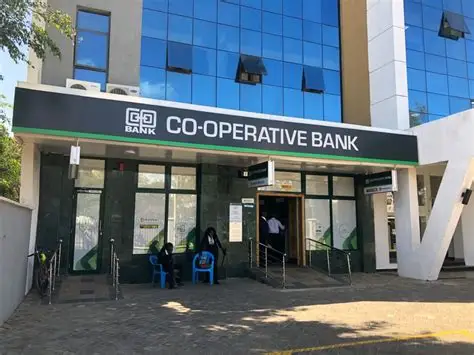
Cooperative Bank of South Sudan has tapped the United Nations Development Programme (UNDP) in what experts are calling one of the most ambitious attempts yet to bring modern finance into the country’s rural economy. The deal, part of the multi-donor Rural Enterprise and Agricultural Development project, aims to pull thousands of small farmers, women entrepreneurs and youth-run agribusinesses into the formal financial system—many of them for the first time. At the signing ceremony in Juba, Caroline Mwongera, the country director for the UN’s International Fund for Agricultural Development (IFAD), termed the deal a turning point. “This agreement represents a transformational step in strengthening South Sudan’s rural financial systems,” she said, adding that the project will use credit, cooperative development and financial literacy as tools for long-term rural transformation. Backed by a $20 million (Sh2.6 trillion) IFAD grant and additional contributions from the South Sudanese government, UNDP, Cooperative Bank and local communities, this brings the total funding to more than $25 million (Sh3.3 trillion). The initiative aims to reach 162,000 people across seven counties, with half expected to be women and 70 percent youth. Officials say the structure of the project reflects the realities of South Sudan’s farm economy, where many farmers still rely on informal savings groups, handwritten lending records and unstructured markets.
Cooperative Bank of South Sudan has tapped the United Nations Development Programme (UNDP) in what experts are calling one of the most ambitious attempts yet to bring modern finance into the country’s rural economy. The deal, part of the multi-donor Rural Enterprise and Agricultural Development project, aims to pull thousands of small farmers, women entrepreneurs and youth-run agribusinesses into...

MOST POPULAR

HOT NEWS