Home Blog Page 14
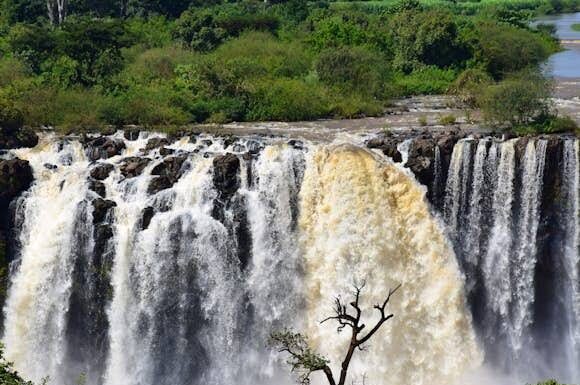
By Samson Oyugi Africa’s largest hydroelectric project The GERD, located on the Blue Nile in Ethiopia with a capacity of 5,150–6,450 MW and a reservoir holding up to 74 billion cubic meters of water is set for inauguration on 9th September 2025 after the completion of the construction works that began in 2011. The dam has been a source of pride for Ethiopia, funded domestically through bonds and public contributions, and is expected to double the country’s electricity output and even enabling energy exports to neighboring countries such as Sudan, Kenya, and Djibouti. The project sparked tensions with downstream nations of Egypt and Sudan, who fear it could reduce their Nile water supply. Egypt relies on the Nile for 97% of its water needs and has referred to the dam as an “existential threat” and labeled its operation without a binding agreement as a violation of international law. Sudan had also expressed concerns, though it has oscillated due to potential benefits like regulated water flows that could reduce on its perennial flooding . Despite years of negotiations, no legally binding agreement on the dam’s operation has been reached after meetings of negotiations up to the African Union level. Ethiopia through Prime Minister Abiy Ahmed has described the dam as a “shared opportunity” for regional cooperation and has extended an invitation to African countries including Egypt and Sudan to it's inauguration. Through his address on the ongoing preparations read to the media in Kenya by the Ethiopian Ambassador to Kenya His excellency Demeke Atnafu Ambulo he said, "Africa should be proud of such an infrastructure that is going to benefit not only Ethiopia but the greater East Africa region and even beyond economically hence solving African problems using African solutions just as Ethiopia has shown". The GERD’s completion marks a significant milestone to Ethiopia’s energy ambitions with its population projected to grow to 240 million by the year 2030 from current 130 million with half the population connected to reliable energy. With the increase in population, their energy demand will too increase.
By Samson Oyugi Africa’s largest hydroelectric project The GERD, located on the Blue Nile in Ethiopia with a capacity of 5,150–6,450 MW and a reservoir holding up to 74 billion cubic meters of water is set for inauguration on 9th September 2025 after the completion of the construction works that began in 2011.
With a career spanning multiple continents, Bartesh Shah, the Chief Executive Officer of SBM Bank Kenya brings a wealth of international experience to SBM Bank Kenya.  Known for his passion for innovation, Mr Shah’s strategy revolves around innovation and the creation of a mobile-first approach to digital banking. 
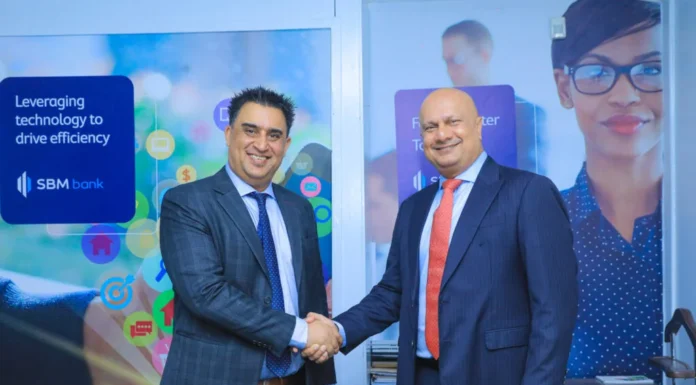
SBM Bank Kenya: A mobile-first digital banking strategy takes shape   With a career spanning multiple continents, Bartesh Shah, the Chief Executive Officer of SBM Bank Kenya brings a wealth of international experience to SBM Bank Kenya.  Known for his passion for innovation, Mr Shah’s strategy revolves around innovation and the creation of a mobile-first approach to digital banking.  His ability to blend global best practices with local insights has been a driving force behind the bank’s renewed vigour. He talked to Business Insights Africa about his plans to make SBM Bank the most preffered financial partner for retail, SME and institutional customers. Excerpts   How has digitalization impacted the bank’s business? Digitalization has transformed SBM Bank, enhancing efficiency, accessibility, and customer experience. Our Mfukoni mobile and internet banking platform has expanded to include services such as ITAX, eCitizen payments, and Platinum Saver account management, ensuring seamless banking for our customers. . SBM  bank gained recognition for The  ‘Digital Banking Innovation of the Year’ Award by the FDI Insider Awards, which serves as a testament to delivering quality banking experience to our customers By automating banking processes, we have improved operational efficiency, reduced costs, and enhanced transaction security. We also use data-driven insights to personalize customer experiences and provide tailored banking solutions. Additionally, our robust cybersecurity measures protect customer transactions, ensuring trust and reliability. On the security front, digitalization has improved our ability to manage risks, with advanced cybersecurity measures ensuring safe transactions and protecting sensitive data.   Briefly touch on key performance indicators Our key performance indicators (KPIs) are designed to capture the full scope of our performance in the banking sector, especially in a challenging business environment. Customer growth is a fundamental metric, and we’ve seen a steady increase in both individual and corporate clients, which reflects the trust we’ve built over time. Deposit growth has been another area of focus, where we’ve maintained strong inflows despite economic pressures, demonstrating the resilience of our business model.   Profitability is a critical KPI, and SBM Bank has remained consistently profitable, even during periods of market volatility. This robust performance is a testament to our effective risk management strategies and our ability to adapt to shifting market conditions. Additionally, we track customer satisfaction metrics to ensure we are delivering exceptional service and value, which has remained strong due to our focus on personalized banking and customer-centric solutions. We also monitor the rate of digital adoption, as more customers embrace our mobile and online banking platforms. This shift has been crucial for expanding our reach and ensuring that customers in remote or underserved areas can access our services. Lastly, we closely drive the impact of our initiatives targeting SMEs, youth, and women-led businesses. The success of these programs, reflected in the increased number of successful businesses and clients served affirms our commitment to driving economic inclusion.   As an experienced hand in banking, where do you want to take SBM Bank? My vision is for SBM Bank to become the preferred financial partner, offering innovative banking solutions and fostering economic growth. Our strategic location along the Indian Ocean rim positions us as a key player in cross-border trade finance. We are committed to digital transformation, customer-centric solutions, and sustainable banking practices.  Our corporate responsibility initiatives include environmental conservation, where we have conducted tree planting and turtle conservation initiatives. We also undertake gender equality and youth empowerment programs, ensuring a positive societal impact. As SBM, we aim to expand our reach, strengthen our digital capabilities, and continue supporting key sectors such as agriculture, service, health, manufacturing, hospitality and many more.  We also appreciate that customers need a trusted banking partner in their financial journey and we offer reliable payments solutions to drive their growth as individuals, institutions or communities. Our payment solutions span across different channels, namely; Mfukoni, Bulk Payments and international remittance and this ensures efficient transactions for various payment needs. We believe in empowering our customers with solutions that transcend mere functionality. Our payment services are more than just tools—they are enablers of success, growth, and financial freedom. Whether you are an individual managing everyday transactions, an SME scaling operations, or a corporate entity expanding internationally, SBM Bank aspires to be your trusted payments partner every step of the way to enable you experience seamless payments and limitless possibilities with SBM Bank.   What kind of impact have you made as a bank? SBM Bank has played a pivotal role in enhancing financial accessibility, supporting business growth, and promoting economic development. Our tailored financial solutions, structured credit services, and commitment to sustainability have strengthened the banking sector. We continue to invest in financial literacy, entrepreneurship support, and community development initiatives. Our vision is to redefine banking by making it more accessible, innovative, and inclusive, driving long-term prosperity in Kenya. What’s SBM Bank’s outlook? Looking ahead, we would like our legacy to be defined by the transformative impact we’ve had on Kenya’s financial sector—making banking more accessible, innovative, and inclusive. Our strategy is focused on sustainable growth, continuous innovation, and deep community engagement, ensuring that SBM Bank Kenya remains a trusted partner in shaping the country’s economic future.              
“We continue to innovate our banking solutions for the retail, corporate and SME sectors to ensure relevance and responsiveness in our banking solutions,” says Mr Shah By Amos Wachira With a career spanning multiple continents, Bartesh Shah brings a wealth of international experience to SBM Bank Kenya. His ability to blend...
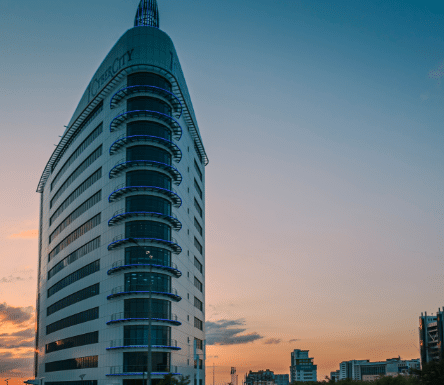
IPT Africa (www.IPTAfrica.com), a purpose-driven leader in the B2B global cross-border payments sector, is proud to announce its selection into the prestigious Visa Accelerator Program - Africa 2025, becoming the first Mauritian company to join this highly competitive, pan-African fintech cohort. Chosen from thousands of high-growth startups across the continent, IPT Africa now joins an elite group of...

adisson Blu has once again secured top honors at the World Travel Awards Africa, taking the title of “Africa’s Leading Hotel Brand” for 2025. This win marks the fourth consecutive year the upperupscale brand has claimed the region’s most prestigious hospitality award, reinforcing its position as an industry leader across the continent. At the same ceremony, Radisson Hotel Group (www.RadissonHotels.com) properties picked up 14 more trophies, led by Africa’s Leading Conference Hotel for Radisson Blu Hotel & Convention Centre, Kigali and swept country awards in Côte d’Ivoire, Gabon, Kenya, Mali, Niger, Rwanda, and Senegal. A heritage of design, service, and growth The Group’s journey began in 1960 with the opening of the world’s first designer hotel in Copenhagen, Denmark. That hotel, now the Radisson Collection Royal Hotel, Copenhagen, is still operating successfully. Since then, Radisson Hotel Group has expanded to ten distinctive brands, with Radisson Blu at its core. In Africa, the Group entered in 2000 with the opening of Radisson Blu Hotel, Waterfront in Cape Town. which has now transitioned to Radisson Collection Hotel, Waterfront Cape Town. Accelerating across Africa Over the past fifteen months, the Group has signed eleven hotels and opened seven, bringing its African portfolio to 100 hotels in more than 30 countries and cementing its status as the continent’s most active international operator. Radisson Blu continues to drive much of that momentum, from Casablanca to Cape Town. Recent highlights include the opening of the Radisson Blu Hotel, Conakry, just three months after signing, as well as new signings, including the Radisson Blu Hotel & Apartments, Yaoundé. Scheduled to open by the end of 2026, the Radisson Blu Hotel, Kinshasa is opening late 2026 “Our teams live and breathe purposeful hospitality, and this award shows how consistently they deliver,” says Tim Cordon, Chief Operating Officer for the Middle East, Africa, and Southeast Asia Pacific at Radisson Hotel Group. “Winning four years in a row isn’t luck. It reflects a clear strategy, strong local partnerships, and a brand culture that turns every stay into a memorable moment. We’re already the most diverse hotel company on the continent, operating in more than 30 African countries, and we’re just getting started. Africa sits at the heart of our growth plans, and guests can expect even more thoughtfully designed Radisson Blu hotels to open their doors soon.” Looking ahead Across its ten brands, Radisson Hotel Group, is on track to reaching 150 hotels by 2030 in Africa and will continue to pair global standards with genuine local insight.
Radisson Blu has once again secured top honors at the World Travel Awards Africa, taking the title of “Africa’s Leading Hotel Brand” for 2025. This win marks the fourth consecutive year the upper upscale brand has claimed the region’s most prestigious hospitality award, reinforcing its position as an industry leader across the continent. At the same ceremony,...
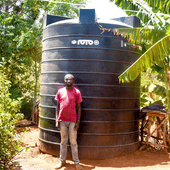
Felicio Fundi is a young, dedicated farmer residing in Rianjeru village, Mbeti South, Embu County. He is a loving husband and also a proud father of one. Felicio bears the essential responsibility of providing for his family, and he achieves this through a diverse array of agricultural pursuits, including dairy farming, pawpaw cultivation, and banana farming. In the semi-arid region of Rianjeru, clean water is scarce. The community depends on the "Rupingazi Rweru" water project, funded by the World Bank, but water is only available on specific days. During dry seasons, residents often go an entire week without any water. Felicio and his young family faced significant challenges, struggling to secure enough water for their crops, livestock, and daily needs. They often stayed up all night collecting and storing water when it's accessible, leaving them vulnerable to bandits and troublemakers who exploit the darkness. This situation made life difficult and dangerous for them. This predicament weighed heavily on Felicio, as it began to slow down his ability to manage the day-to-day activities on his farm. At times, he resorted to hiring a water tanker, which came at a steep cost of Ksh 3,000 for 6,000 liters of water, necessitating five deliveries in a month. This was not only financially burdensome but also unsustainable in the long run. Felicio yearned for a lasting and secure water solution for his family. Fortunately, Felicio was a member of BIMAS Microfinance, where he had been tapping into loans to support his farming endeavors. In March 2021, he received news that BIMAS was offering financing for water tanks to its customers. This was a golden opportunity for him to finally experience an abundance of water in his home. With the support of BIMAS, Felicio secured a loan of Ksh 78,000, enabling him to purchase and install a substantial 10,000-liter water tank on his property. The transformation was worth it. The family was no longer at the mercy of dry seasons; they now had a reliable and ample water supply for both their domestic needs and farming activities. Felicio's family life took a turn for the better. He radiated happiness as a father and husband. With their newfound water security, the family harbors ambitious plans to expand their farming enterprise. They even own another farm situated near a river, and BIMAS's support extends to financing the purchase of a water pump for this venture. In Felicio's own words, he joyfully exclaims, "I can now farm with confidence throughout the year. My small-scale farming business has thrived since partnering with BIMAS. We are no longer constrained, and our lives are no longer endangered during the night. We can rest early and wake up refreshed to tend to our farming." Felicio’s success story highlights BIMAS Microfinance's commitment to Sustainable Development Goal 6 by ensuring sustainable water management. By financing water tanks and pumps, BIMAS tackles water scarcity in semi-arid regions like Rianjeru, enhancing farmers' quality of life and promoting sustainable agriculture. This support boosts both economic and social well-being in the community, demonstrating a commitment to improving water access and management.
Felicio Fundi is a young, dedicated farmer residing in Rianjeru village, Mbeti South, Embu County. He is a loving husband and also a proud father of one. Felicio bears the essential responsibility of providing for his family, and he achieves this through a diverse array of agricultural pursuits, including dairy farming, pawpaw cultivation, and banana farming.
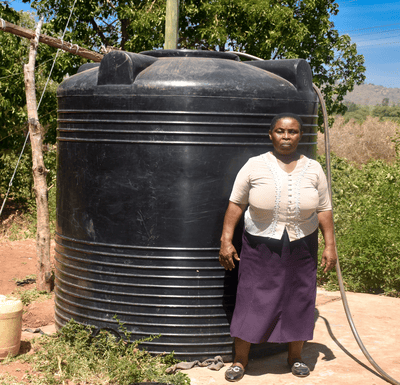
Meet Teresia, a resilient woman from Kiamuringa village in Gachoka location, Embu County who has defied adversity to secure a brighter future for her family. With five children to care for, Teresia took on the role of the family's sole provider, juggling various income streams from poultry and miraa farming to brick manufacturing. Her determination knew no bounds as she aspired to become a landlady in her community. In Kiamuringa, a semi-arid region, clean water was once a distant dream. Villagers had to trek two kilometers in search of boreholes, which often ran dry. To ensure her children's access to water, Teresia's young ones would wake up at 4 am daily to avoid the long queues, forcing Teresia's children to rise before dawn, braving long queues, their education hanging by a thread. Moreover, the exposed boreholes posed health risks due to waterborne diseases.  Frustrated by this situation, Teresia turned to BIMAS microfinance. She had been a loyal member for years, securing loans to nurture her miraa, poultry, and brick businesses. She recognized that hens, miraa, and brickmaking all demanded copious amounts of water for success. In January 2021, a ray of hope emerged as Teresia learnt that BIMAS was offering financing for water tanks to its customers. She seized this opportunity and secured a Ksh 27,000 loan to purchase and install a 4,000-liter water tank in her home. Additionally, BIMAS assisted her in acquiring a water pump worth Ksh 50,000. These investments proved to be game-changers, allowing her to operate her businesses seamlessly even during dry seasons. Today, Teresia's life has undergone an admirable transformation. She is not only a content mother but also a generous neighbor who shares her reservoir's abundance with the community. Her children's education has significantly improved as they can now focus on their studies without the burden of water-fetching. Furthermore, access to clean water has enhanced their health and overall well-being. Teresia's entrepreneurial spirit has thrived with BIMAS's support, leading to the establishment of a rental business on her property. Her success story is a proof to how access to clean water can unlock opportunities and improve lives. With a radiant smile, she expresses her gratitude, saying, "BIMAS has brought joy into my life, and I am delighted to see my neighbors benefit as well. I eagerly look forward to securing financing for another 6,000-liter water tank for my rental premises." Teresia's journey to water prosperity is an inspiration to us all.
Meet Teresia, a resilient woman from Kiamuringa village in Gachoka location, Embu County who has defied adversity to secure a brighter future for her family. With five children to care for, Teresia took on the role of the family's sole provider, juggling various income streams from poultry and miraa farming to brick manufacturing. Her determination knew no...
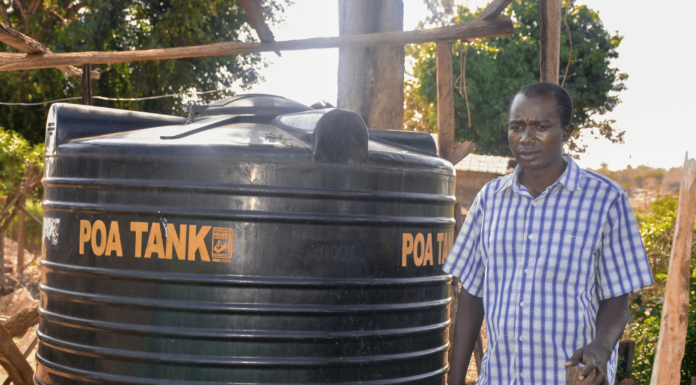
Dennis Ngari, a resident of Rianjeru village in Embu County, faced significant challenges due to water scarcity in the semi-arid region. The community depended on a World Bank-funded water project, which often ran dry during the harsh dry seasons. As the sole breadwinner, Dennis struggled to provide enough water for his farm and his family's needs, forcing him to make long trips on his boda-boda to fetch water from distant sources. His farm, located near a river, had to compete with other farmers for the limited water supply, leaving his family in a constant struggle. In February 2021, Dennis found a lifeline through BIMAS microfinance. He received a loan of Ksh 42,000 to buy and install a 6,000-liter water tank at his home. This loan transformed his life. With a reliable water supply, Dennis's farm flourished, and his boda-boda business stabilized. The constant access to water allowed him to tend to his crops year-round, even during the dry seasons. Now, Dennis and his family are planning to expand their business, aiming for another loan to purchase a 10,000-liter tank to ensure an ample water supply for their growing farm. Grateful for the support, Dennis says, "BIMAS came to my rescue when I was about to give up on farming. Now, I can farm in all seasons without worrying if the rivers run dry. My farming business has flourished since joining hands with BIMAS. We can nurture our farm day or night, rain or shine." Dennis's story is a shining example of the positive impact BIMAS has had on his life and his family's future.
Dennis Ngari, a resident of Rianjeru village in Embu County, faced significant challenges due to water scarcity in the semi-arid region. The community depended on a World Bank-funded water project, which often ran dry during the harsh dry seasons. As the sole breadwinner, Dennis struggled to provide enough water for his farm and his family's needs, forcing...
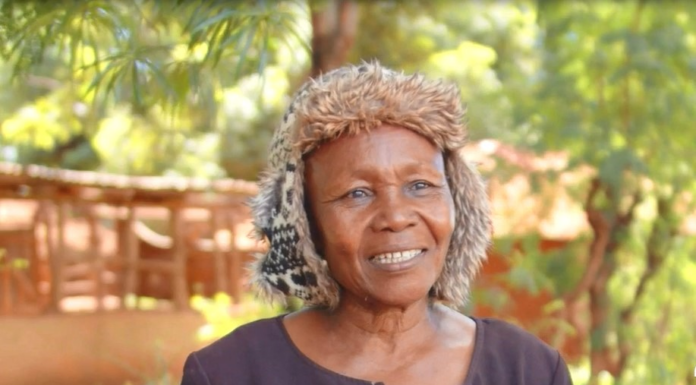
Christine Gakii is a BIMAS customer from Mukothima, Tharaka North, Tharaka Nithi County. Her journey with BIMAS Microfinance began in 2014, after her life had taken a dramatic turn. Family disputes had stripped her of everything, leaving her in a state of despair. Just when all seemed lost, a trusted friend guided her towards BIMAS Microfinance. Her journey with BIMAS began with a modest loan of Ksh 30,000, which she invested in her dream of starting a cereal farm. Through hard work and perseverance, she repaid her loans faithfully and steadily climbed the loan tiers. Her farm flourished, expanding across multiple plots of land. With courage, she ventured into a new frontier: a pork butchery with a small kitchenette. Her determination paid off, and the business thrived. Seeing her dedication, BIMAS went further, helping her acquire a motorbike to transport her products more efficiently. As her pork business grew, the daily slaughtering of pigs demanded more water. Recognizing her relentless commitment, BIMAS provided funding for a water tank and an energy saving Jiko for her kitchenette. Christine's journey is truly inspiring. Despite facing many challenges, she has risen above them all. Now, she owns a thriving pork butchery, employs many people, and has become a successful landowner and farmer. She even owns three motorbikes. Christine dreams of building rental houses on one of her best pieces of land, which is close to an institute. With BIMAS ready to help, her dream is on its way to becoming a reality. She proudly refers to BIMAS Microfinance as her "father and mother," underscoring the profound impact it has had on her life. In a heartfelt message, she encourages those facing hardships not to turn to stress-induced drinking, but to seek support from BIMAS. She says, "At BIMAS, help is available for everyone." Christine's journey with BIMAS Microfinance exemplifies women empowerment and promotes multiple Sustainable Development Goals. Through initial funding and continuous support, BIMAS enabled her to break the cycle of poverty and establish a thriving business in cereal farming and pork butchery, enhancing food security in her community. By nurturing her entrepreneurship, BIMAS promotes gender equality and economic empowerment. Moreover, Christine's enterprise generates employment opportunities and sustains livelihoods. The provision of a water tank further ensures operational efficiency and supports her overall well-being. 
By Catherine Mukami Christine Gakii is a BIMAS customer from Mukothima, Tharaka North, Tharaka Nithi County. Her journey with BIMAS Microfinance began in 2014, after her life had taken a dramatic turn. Family disputes had stripped her of everything, leaving her in a state of despair. Just when all seemed lost, a trusted friend...
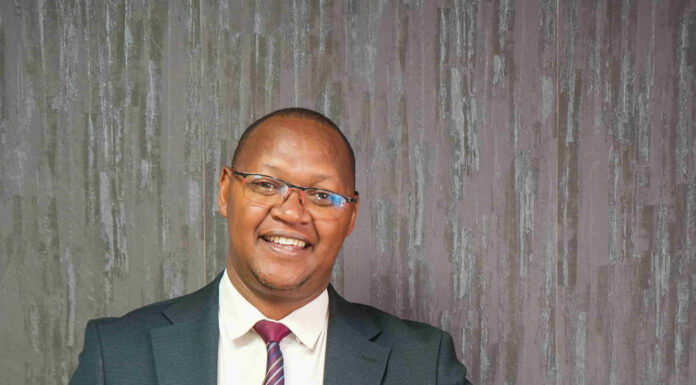
Champions of Financial Inclusion
For millions of Kenyans living on less than two US dollars a day, financial shocks such as illness, funeral expenses, livestock deaths, or crop failures can tip them or their families below the poverty line.  While the traditional microfinance model provides financial tools to create buffers against such setbacks, there’s no “one size fits...

MOST POPULAR

HOT NEWS