
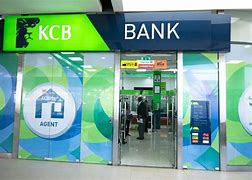
KCB Group PLC recorded Ksh40.8 billion in profit after tax for the full year ending December 2022 on higher funded and non-funded income streams.
This was a 19.5% rise in profitability from Ksh34.2 billion reported in 2021, KCB said on Wednesday during the release of the financials.
The profit before tax contribution of other subsidiaries excluding KCB Bank Kenya increased to 17.0% (up from 13.9% in 2021), riding on organic growth and increased scale in the businesses.
Parameter 2021FY 2022FY Change
PAT Ksh34.2 billion Ksh40.8 billion 19.5%
Revenues Ksh108.6 billion Ksh129.9billion 19.6%
Costs Ksh47.8 billion Ksh59.4 billion 24.1%
Total Assets Ksh1.14 trillion Ksh1.55 trillion 36.4%
Customer Loans Ksh675 billion Ksh863 billion 27.8%
Customer Deposits Ksh837 billion Ksh1.135 trillion 35.6%
“The strong performance for the year was as a result of our business strategy that is anchored on customer obsession, sharper execution, and a productive organisation culture. The business benefited from a vibrant core banking business, growth of new business lines and accelerated digital transformation to post this record performance,” said KCB Group CEO Paul Russo.
“Overall, we have positive momentum, and we shall build on this and ensure that we make significant step change in culture and performance, across all our business units. Despite a challenging operating environment, the belief in our people, enhanced digital capabilities, impetus in our regional businesses and successful integration of Trust Merchant Bank (TMB)—our latest subsidiary in the Democratic Republic of Congo— makes a good case for better performance,” he added.













![Kisumu, UN-Habitat sign Ksh2.7bn deal for social housing upgrade The signing ceremony took place in Kisumu, with Governor Prof. Anyang’ Nyong’o representing the county government and UN-Habitat Executive Director in Kenya, Anaclaudia Rossbach, signing on behalf of the UN agency. Under the agreement, both parties commit to jointly implementing the housing upgrade project, which Governor Nyong’o said will primarily target vulnerable groups. “The PINUA programme [is] designed to benefit the most vulnerable members of the community,” Nyong’o said, reaffirming his administration’s commitment to fostering sustainable neighborhoods equipped with essential services. Beginning November 1, 2025, the county government, working with UN-Habitat, will launch pilot projects in Kibuye Estate and Muhoroni Sub-County, based on designs and models developed through extensive public participation. The programme will focus on upgrading informal settlements by providing essential social infrastructure such as schools, sanitation facilities, affordable rental housing, early childhood development centres, and public open spaces. It also supports incremental housing models, allowing families to progressively build and eventually own decent homes. Rossbach emphasized UN-Habitat’s global commitment to driving transformative change in urban areas: “This partnership is crucial in advancing our new strategy, which focuses on improving housing access and digitally transforming informal settlements for everyone.” According to UN-Habitat housing architect Fred Omenya, the pilot phase will begin in January 2026 with the construction of two blocks of 24 housing units in Kibuye Estate.](https://businessinsights.africa/wp-content/uploads/2025/10/About-us-still-25957706200_7ca2db7e5e_k-100x70.jpg)