
Listed financial services solutions provider Diamond Trust Bank (DTB) (NSE: DTK) has announced a Ksh 4.9 billion net profit, representing a 12% growth in its half-year results announced today.
DTB Group Chief Executive Officer and Managing Director, Mrs Nasim Devji, attributed the Bank’s performance to the continued rollout of its business growth strategy, which seeks to enhance customer value through increased customer reach, digital transformation, and sustainability excellence.
“At DTB, we are actively focusing on enhancing the delivery of our group business growth strategy. This strategy is geared at achieving socio-economic relevance and pivoting DTB to be a customer-centric, top-tier, digitally driven Bank in East Africa,” Mrs Devji said.
She added, “The DTB business growth strategy is also premised on achieving sustainability excellence and is underpinned by our core purpose of improving the quality of life for all our stakeholders. It enables us to create value by enriching the lives of our customers and other stakeholders in a sustainable, meaningful and impactful way.”
DTB, which has traditionally been strong in key sectors such as trade, manufacturing, real estate and construction, has diversified and expanded its focus on new sectors, including agriculture, education, technology and the public sector. This strategy has begun to bear fruit, with DTB growing its customer base to over 2 million customers across East Africa, growing by a significant 75% over the past year.
“At DTB, we continue to apply a clinical focus in ensuring that we continue to roll out our strategic plans, and the half-year results bear testimony to the hard work put in by our teams to achieve positive customer outcomes,” Mrs Devji said. She added that, “we managed to grow customer deposits to Ksh 432 billion and stabilise our non-performing loans portfolio while accelerating our customer acquisition and service, sustainability excellence and digital transformation efforts as customers continued to Bank with us and Bank on us.”
DTB’s subsidiaries in Tanzania, Uganda, and Burundi contribution to pretax profits, Mrs Devji said, improved to 35%, up from 23% posted within the same period last year, reflecting enhanced performance, particularly in Tanzania. “The improved performance reflects the group’s inherent resilience and diversity, drawing from its growing presence in markets outside Kenya, where we continue to optimise on existing and emerging opportunities,” Mrs Devji said.
DTB Finance & Strategy Director Mr Alkarim Jiwa said the Group’s total assets grew to Ksh 585 billion during the half-year period under review, up from Ksh 579 billion posted during the same period last year. Operating income increased by 10% to Ksh 20.6 billion, while pretax profits grew to Ksh 6.3 billion.
He said the current account and Savings Account (CASA) deposits ratio improved to 54%, up from 49% in the same period last year, driven by growth across all customer segments.
“Net interest income improved to Ksh 14.2 billion, up from Ksh 13.1 billion earned in the first half of 2023, on the back of better interest margins and non-interest income revenues. The operating expenses increased to Ksh 10.6 billion, up from Ksh 9.4 billion, due to significant investments made in building robust digital platforms, expanding branch footprint and talent to support the delivery of the business growth strategy,” Mr Jiwa said.
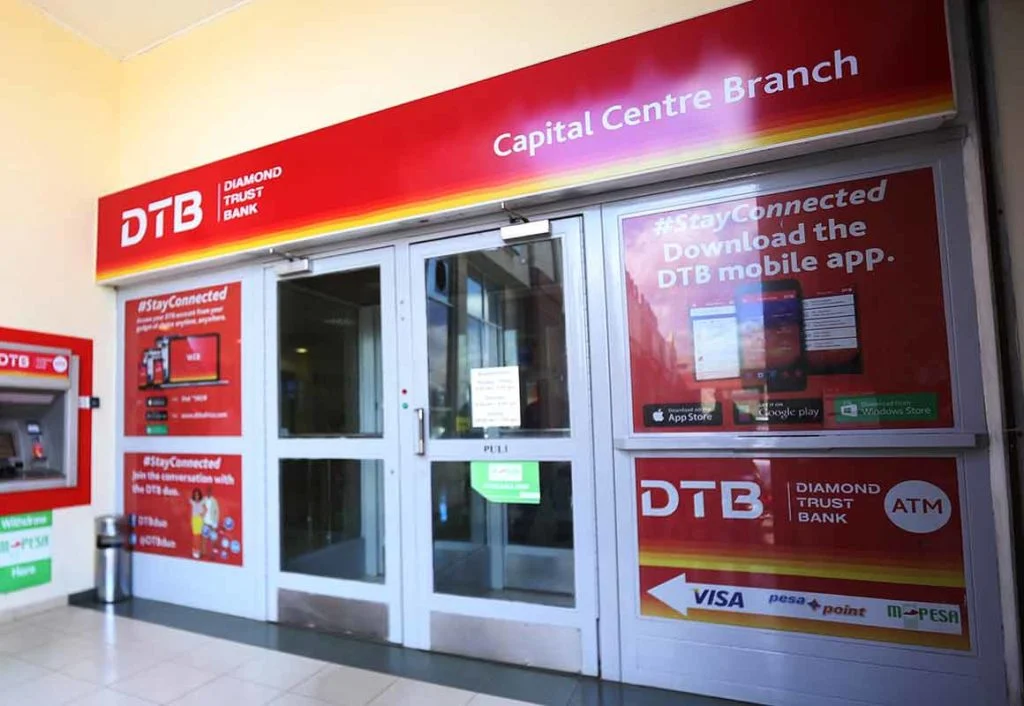
He confirmed that the regional business growth model will also be hinged on a two-strand approach: the use of the traditional brick-and-mortar infrastructure and the deployment of new-age technology to deepen penetration and provide convenience and access to our customers.