|
Life-saving transports will help COVID-19 testing of refugees and displaced persons
|
|
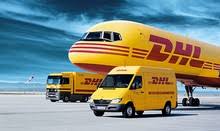
DHL (www.DHL.com) has transported nearly 26,000 Covid -19 testing vials for Longhorn, who is donating one million vials to the International Organization for Migration; Vials were transported via three initial flights from Indianapolis to Kenya, Nepal and the Philippines, supporting emerging markets in the process; Life-saving transports will help COVID-19 testing of refugees and displaced persons.
 DHL Global Forwarding, the air and ocean freight specialist of Deutsche Post DHL Group, has partnered with Longhorn Vaccines & Diagnostics(https://LhnVD.com), an innovative molecular tool, assay and vaccine development company focused on serving unmet critical needs in both developed and developing nations, to deliver much-needed Covid-19 testing vials to the International Organization for Migration (IOM) in Kenya, Nepal and the Philippines. Longhorn is donating one million tubes of its PrimeStore® Molecular Transport Medium (MTM) in an effort to increase the safety and efficacy of Covid-19 testing of refugees and displaced persons in the three countries. In the face of the unprecedented global health crisis, DHL Global Forwarding has tapped its global network of experienced LSH logistics specialists to transport nearly 26,000 vials of Longhorn’s PrimeStore®MTM thus far. These deliveries represent a continued commitment to provide a holistic range of patient-centric solutions and deliver them where they are needed most – especially during a pandemic. “During these challenging times, it is especially critical that we extend our expertise and leverage the full strength of our network, to support the fight against Covid-19 worldwide by ensuring a steady flow of essential items, including testing vials and Covid-19 vaccines,” said Ivin George, Managing Director, DHL Global Forwarding, Eastern Africa. “The trust which we have accumulated over the years with companies who share the same vision as us, has put us in good stead to not just get a job done, but to do so with precision and passion.” The pandemic has caused increased challenges in the intricate deliveries of temperature controlled shipments, including stricter controls at international borders, the absence of airfreight capacity, and high demand for medical supplies around the world. For this reason, Longhorn chose DHL Global Forwarding, who thanks to its specialists, worldwide network of terminals, warehouses and offices, and technological infrastructure, remains able to effectively maintain supply chains. Despite the strained situation in air and ocean freight, urgently-needed protective equipment, medicine, and SARS-CoV-2 test kits and vials in particular are still being transported. “Once we coordinated the donation of one million PrimeStore® MTM sample collection devices with the IOM, we needed to manage the logistics of such a large endeavor,” stated Jeff Fischer President of Longhorn Vaccines and Diagnostics. “PrimeStore® MTM inactivates SARS-CoV-2 during collection and transit, which can reduce the need for safety cabinets and reduce the time between collection and results. With the need to ship to different countries on multiple continents and traverse to varied customs requirements, DHL was the clear choice given the importance of reliable transportation in the testing process.” The IOM is an inter-governmental organization dedicated to promoting humane and orderly migration, with 173 member states, nine states holding observer status and offices in over 100 countries. The IOM works to ensure the orderly and humane management of migration, promote international cooperation on migration issues, assist in the search for practical solutions to migration problems and provide humanitarian assistance to migrants in need, including refugees and internally displaced people. Throughout this pandemic and beyond, DHL Global Forwarding is committed to track, comprehend, and comply with essential and increasing rules and regulations for the storage, transportation, and delivery of pharmaceuticals, medical equipment, biological products, and patient-specific treatments. This past December, DHL started the international distribution of COVID-19 vaccine. For the provision of its citizens, the government of Israel received the first batch of the vaccine with flights operated by DHL Express and DHL Global Forwarding. DHL Global Forwarding also dedicated a charter flight for additional supplies of vaccine doses with more to follow. Additionally, DHL Global Forwarding delivered the first batch of COVID-19 vaccines to Singapore. DHL Global Forwarding arranged for the collection of the vaccines from the manufacturing site in Puurs, Belgium, where the cargo was accompanied by security escorts on the road to the Brussels International Airport. The cargo arrived at Singapore’s Changi International Airport on December 21 where DHL handled the customs clearance and final delivery to a designated location in Singapore. The company will also handle the return of these special shipper boxes to Europe. Nine thousand specialists work across DHL’s dedicated global network so that pharmaceutical, medical devices, clinical trials and research organizations, wholesalers and distributors, as well as hospitals and healthcare providers are connected across the value chain and through digitalization, from clinical trials to point of care, and every step in between. DHL’s portfolio for the healthcare industry includes 150+ pharmacists, 20+ clinical trials depots, 100+ certified stations, 160+ GDP-qualified warehouses, 15+ GMP-certified sites and 135+ medical express sites. Deutsche Post DHL Group also has a well-established infrastructure in place to promote volunteer engagement among its employees and support refugee aid and support programs. The Group’s Living Responsibility Fund provides financial assistance to support voluntary work performed by employees. An internal We Help Each Other fund is fed by individual employee donations to help colleagues who find themselves in need in the wake of natural disaster. In its public-private partnerships, Deutsche Post DHL Group also promotes education and employment opportunities, and assists both disaster prevention and disaster response with a GoHelp disaster management program which it has operated in partnership with the United Nations (UN) since 2005. Through this partnership, the Group provides the UN and national disaster management agencies with pro bono access to its core logistics expertise, and the logistics skills of more than 700 specially-trained employee volunteers worldwide who can deploy within 72 hours after a natural disaster. Disaster Response Training is part of the Go Help program, as well as the Get Airports Ready for Disaster (GARD) initiative –also part of the GoHelp program – trains airport management in high-risk regions to be better prepared should disaster strike. |