|
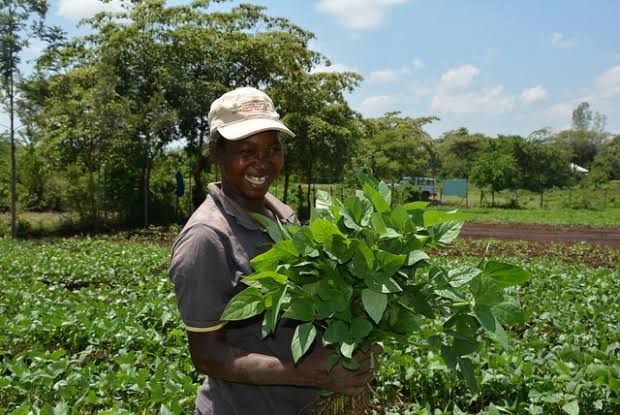
The AgriPitch competition offered young entrepreneurs in Africa’s agricultural sector the opportunity to pitch their agribusiness proposals to a panel of experts and investors
|
|
The founder of a cassava processing business in Kenya, a co-founder of a novel food processing technology start-up, and the owner of a smallholder farmer food procurement company in Nigeria won the top cash prizes in the African Development Bank’s (https://www.AfDB.org/) $120,000 AgriPitch competition on Tuesday.

The AgriPitch competition offered young entrepreneurs in Africa’s agricultural sector the opportunity to pitch their agribusiness proposals to a panel of experts and investors who selected winners in “early start-up,” “mature start-up” and “women-empowered businesses” categories. “I was so excited when I heard my name [called],” said Elizabeth Gikebe, founder of Mhogo Foods(https://bit.ly/35LsEhs) in Kenya, who won the women-empowered businesses category $20,000 prize. Gikebe says she entered Mhogo Foods – a company that adds value to cassava production by processing the tubers into gluten-free flour, cassava snacks and animal feeds – into the competition in 2018 and again in 2019 without success. She says she’s glad she didn’t give up. “With a lot of persistence, you can get what you are looking for. It showed me that everything has its time,” Gikebe said. Held virtually, AgriPitch saw more than 2,500 applications and 605 proposals from 30 countries shortlisted down to 25 finalists from 12 countries. The finalists qualified for a two-week business development boot camp, and then a select top 9 AgriPitch competitors made their final pitches to an online panel of judges and investors. “To be chosen from such a qualified list of businesses is always exciting,” said Ikenna Nzewi, the early start-up category winner, representing Releaf(https://bit.ly/3pH0f44), a food pre-processing technology company. Started by Nigerian-American graduates from MIT, Yale, and Duke universities who set up shop in Uyo, Nigeria, Releaf plans to save the $20,000 competition prize for future investment. “We are very confident about the work that we are doing to catalyze industrialization in food processing. It is excellent to see the African Development Bank with its High 5s(https://bit.ly/2HgsBAV) focus – one of them being industrialization – to also be supporting us,” Nzewi added. The winner of the $40,000 mature business category prize, Foodlocker(https://bit.ly/35LSZfa) CEO Femi Aiki, said the seed funding provides “a lot of fuel for the road” for his business. Foodlocker supports smallholder farmers with technologies for the production of foods such as tomatoes and chicken. Aiki said one of the major areas where Foodlocker needs support is working capital. “Now we can afford to buy more inputs. We can now afford to bring on board more experts in those value chains who can support smallholder farmers more remotely…That money will support the company to get results,” he added. The AgriPitch competition was part of the Bank’s fourth African Youth Agripreneurs Forum (AYAF) – one of the continent’s most exciting platforms for African youth in the agriculture start-up scene – which kicked off on 3 November with weekly webinars and ended with the AgriPitch winners’ ceremony. “The Bank’s Enable Youth Program aims to empower youth at each stage of the agribusiness value chain by harnessing new and innovative skills, technologies and financing approaches, so that the youth can establish viable and profitable small and medium-sized enterprises,” said Edson Mpyisi, Coordinator of the Bank’s Enable Youth Program responsible for the event. In Africa, small and medium-sized enterprises account for 90% of all businesses and create 70% of all the jobs and are the drivers of economic growth and long-term sustainability. “Through the AgriPitch competition, the Bank is committed to supporting youth who are ambitious, creative, technology-savvy, and who have an entrepreneurial spirit to establish profitable small and medium-sized enterprises for a prosperous and inclusive Africa,” Mpyisi added. In collaboration with partners, including UN Women, African Leaders for Nutrition and the Affirmative Finance Action for Women in Africa initiative (AFAWA), this year’s AYAF and AgriPitch competition awarded the winner and runner-up prizes as follows: Mature Start-ups Women-empowered Businesses Early Start-ups In addition to receiving seed funding prizes and post-competition mentoring, AgriPitch winners will be invited to the AYAF online DealRoom, which connects expansion-ready, youth-led African businesses with global investors. Watch the final AYAF webinar and AgriPitch finals: https://bit.ly/3nAHWM4 |
Home Technology Gadgets African Development Bank’s AgriPitch competition awards $120,000 in prizes to African youth...


![Canon makes history with 170 Million lenses milestone Canon’s RF/EF lens production exceeds 170 million units, extending its world record in interchangeable lens production Both EF and RF lenses have gained strong support from a wide range of users—from beginners to professionals—leading to steady growth in production volume Canon Inc. announced that, in October 2025, Canon reached a historic milestone of producing a cumulative total of 170 million RF and EF interchangeable lenses for its EOS series, extending its world record for the highest number of interchangeable camera lenses ever produced. The EF lens was introduced in 1987 as the dedicated lens system for Canon’s EOS autofocus single-lens reflex film camera, debuting simultaneously with the EOS system itself. Since their inception, EF lenses have led the industry by incorporating a series of world-first technologies, including the Ultrasonic Motor (USM), Image Stabilizer (IS) technology, and a multilayered Diffractive Optical (DO) element, and have undergone numerous evolutions. In 2018, Canon launched the RF lens series, designed for the EOS R mirrorless camera system, which features a large aperture, short back focus, and high-speed communication system to deliver even higher image quality. The RF and EF lens series lineup now includes a total of 108 models , covering a wide range of focal lengths from ultra-wide 10mm to super-telephoto 1200mm. The series also includes the world’s first VR lens lenses with built-in power zoom suited for video shooting, and even those compatible with power zoom adapters—expanding the scope of creative expression and meeting the diverse needs of users for both still photography and video. EF lens production began at Canon’s Utsunomiya Plant in 1987. Since then, both EF and RF lenses have gained strong support from a wide range of users—from beginners to professionals—leading to steady growth in production volume. Today, Canon manufactures lenses at five sites: Utsunomiya Plant; Canon Inc., Taiwan; Canon Opto (Malaysia) Sdn. Bhd.; Oita Canon Inc.; and Miyazaki Canon Inc. Milestones include 10 million units produced by 1995 and 50 million by 2009. Then in 2014, Canon became the first company in the world to reach 100 million interchangeable camera lenses produced. In October 2025, the company reached 170 million units, leading to the achievement of this world record. The 170 millionth lens produced was the RF 70-200mm F2.8 L IS USM Z. Canon has maintained the No.1 global market share for digital interchangeable-lens cameras for 22 consecutive years since 2003. Moving forward, Canon will continue to refine its proprietary imaging technologies and further strengthen and expand its lens lineup, pioneering new imaging possibilities and contributing to the continued evolution of photographic and video culture. Highlights in the development of the RF/EF Lens Series The EF lens, which was introduced alongside EOS in March 1987, has adopted a variety of world-first technologies, including Image Stabilizer (IS) technology, featured in the EF 75-300mm f/4-5.6 IS USM released in 1995; a multilayered Diffractive Optical (DO) element, used in the EF 400mm f/4 DO IS USM launched in 2001; and Subwavelength Structure Coating (SWC) [7], applied to the EF 24mm f/1.4L II USM released in 2008. In 2021, Canon launched the EOS VR System, a VR video system consisting of a mirrorless camera [8], dedicated lens, and PC software, thereby creating a 3D 180° VR video through an interchangeable lens camera. In 2024, Canon began rolling out a new series of hybrid lenses equipped with iris rings, designed to meet the needs of both still photography and professional video production. For zoom lenses, the company has also launched RF 24-105mm F2.8 L IS USM Z and RF 70-200mm F2.8 L IS USM Z which are compatible with power zoom adapters. For single focus lenses, the company released F1.4 L hybrid prime lens series that unified the size and ring and button position across models. In September 2025, Canon launched RF 85mm F1.4 L VCM, the fifth model in this series, demonstrating that it can meet demands in line with the changing times. [1] Includes EF, EF-S, EF-M, EF Cinema, RF, RF-S, and RF Cinema lenses and extenders. As of October 21, 2025 (according to a survey by Canon) [2] Among SLR cameras (according to a survey by Canon) [3] Number of products sold as of October 22, 2025 (including extenders). The number of lens models for sale is different according to market figures. [4] Focal length is 5.2mm to 1200mm when including VR lenses [5] An interchangeable digital camera lens that enables VR footage with a single camera. Among interchangeable lens digital cameras released as of October 5, 2021 (according to a survey by Canon) [6] Refers to unit share (according to a survey by Canon) [7] A special coating with advanced anti-reflective properties [8] For applicable cameras, please visit the official Canon website *Release dates in this document refer to dates in Japan. Canon Central and North Africa (CCNA) is a division within Canon Middle East FZ LLC (CME), a subsidiary of Canon Europe. The formation of CCNA in 2016 was a strategic step that aimed to enhance Canon’s business within the Africa region - by strengthening Canon’s in-country presence and focus. CCNA also demonstrates Canon’s commitment to operating closer to its customers and meeting their demands in the rapidly evolving African market. Canon has been represented in the African continent for more than 15 years through distributors and partners that have successfully built a solid customer base in the region. CCNA ensures the provision of high quality, technologically advanced products that meet the requirements of Africa’s rapidly evolving marketplace. With over 100 employees, CCNA manages sales and marketing activities across 44 countries in Africa. Canon’s corporate philosophy is Kyosei – ‘living and working together for the common good’. CCNA pursues sustainable business growth, focusing on reducing its own environmental impact and supporting customers to reduce theirs using Canon’s products, solutions and services. At Canon, we are pioneers, constantly redefining the world of imaging for the greater good. Through our technology and our spirit of innovation, we push the bounds of what is possible – helping us to see our world in ways we never have before. We help bring creativity to life, one image at a time. Because when we can see our world, we can transform it for the better.](https://businessinsights.africa/wp-content/uploads/2026/05/1.-Canon-EOS-R50-Mirrorless-Camera-for-Beginners-1024x764-1-100x70.jpg)