
|
Africa is potentially one of the most ‘ready-for-circularity’ continents because its ecological footprint is still very low
|
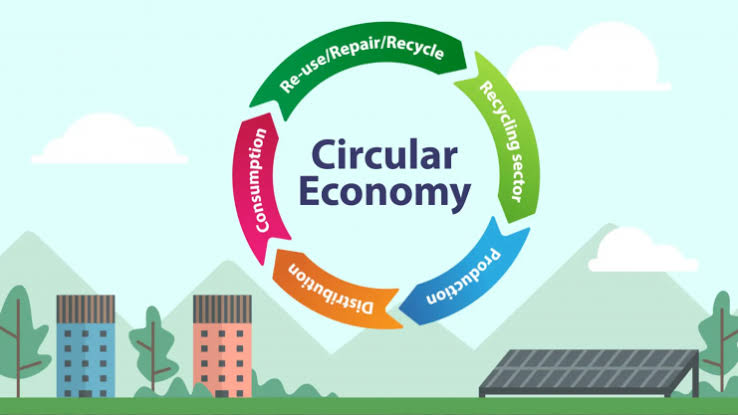
| The continent’s chances of moving towards circular business models are easier than in other continents where most infrastructures were built without their next life cycles in mind. Africa is potentially one of the most ‘ready-for-circularity’ continents because its ecological footprint is still very low. Join REVOLVE Circular and circular experience on 14 January to learn more about the opportunities and challenges of circularity in Africa.
Circular economy approaches can ensure affordable and eco-friendly infrastructure development, provide jobs for millions of Africans working in the informal economy, and help preserve the productive capacity of critical natural capital. But what exactly is this new concept, and how can it inspire investments, policy-making and socio-ecological as well as economic development challenges in Africa? Join four high-level panelists for answers and insights in a free live-stream (https://bit.ly/ “Our reporting (https://bit.ly/3sky24u) and the live-stream aim to address a perception challenge: too many people, in Africa and elsewhere, equate the circular economy to recycling and waste management,” explains Sören Bauer, President of REVOLVE Circular (www.Revolve.media/Circular). “The concept is much bigger than that. For example, one of the so-called ‘action imperatives’ of the circular economy is ‘Refuse’ – with implications for different stakeholders: product designers refuse certain materials in the first place, to avoid waste; producers refuse the use of specific hazardous or toxic materials or any virgin material; consumers refuse certain products, choose to buy less, use less, or to reject packaging waste and shopping bags. Once all the action imperatives of the circular economy are better understood, people start realizing just how innovative and potentially disruptive the concept, and a ‘circular lifestyle’, is.” In addition to recycling, at least two other action imperatives of circularity present big opportunities for Africa: remanufacturing and refurbishment. Remanufacturing hubs across the continent can be created in many African countries and would generate sustainable jobs. A network of remanufacturers in charge of restoring products back to their original state can satisfy local and regional demand or resell remanufactured products to Europe and the Middle East. Co-produced by REVOLVE Circular and Circular Experience, two Vienna-based non-profit organisations, the live-stream on 14 January will address the opportunities and challenges of the circular economy in Africa. Four distinguished panelists from finance, academia, policy-making and civil society will offer insights into four different perspectives:
The panelists will discuss questions such as:
Michael Boyle, founder of circular experience, will co-moderate the event; he offers his perspective on circularity: “I believe that Africa is one of the centers of frugal innovation, the process of reducing the complexity and cost of a good and its production. This allows us to overcome scarcity and optimize what we have. For me, frugality is the main source of innovation, and it can help turn the circular economy into the game-changer we need to reach sustainability goals globally.” The circular economy is indeed an emerging paradigm and ‘umbrella concept’ which includes many various views, concepts and schools of thought. Among those usually referred to are industrial symbiosis, cradle-to-cradle and biomimicry; while the concept is rightly criticized for mainly being rooted in such theory that emerges from the Global North, the CRESTING research project, a partner of REVOLVE Circular, now provides an interactive timeline of over 70 circularity concepts(https://bit.ly/39wmJ0i) from the Global South and North alike; they also include Ubuntu, Vivir Bien or the second encyclical of Pope Francis, Laudato Si’, in which the pope critiques consumerism and irresponsible development, and laments environmental degradation. The first pan-African circular economy conference The 14 January live-stream is also an important stepping stone towards “Africa Circular”, the first pan-African Circular Economy Conference planned for 2022 by the African Circular Economy Network (ACEN), a civil society group; it will bring together policy-makers, academia, corporate decision-makers and circular economy specialists from around Africa and beyond. “As part of our policy advocacy we are planning five regional online workshops in 2021; they shall prepare and culminate in ‘Africa Circular’ next year, the first pan-African multi-stakeholder event to inform about and drive the circular agenda in Africa”, says Jocelyne landry Tsonang, Executive Team member ACEN. “We are pleased to collaborate with REVOLVE Circular on the event and invite governments, international organisations, development banks and companies with a sustainability mind-set to join us in this effort and make it happen.” Towards a compelling Circular Economy narrative Stuart Reigeluth, founder of REVOLVE Group and Vice-President of REVOLVE Circular explains the reasons behind creating this new non-profit organization: “The circular economy is a key concept that can and needs to set different priorities in different world regions. We created REVOLVE Circular as a non-profit organization with the goal of informing and driving the necessary transformation from a linear to a more circular economy with policy advocacy and strategic communication. Part of our work is to collaborate with media decision-makers and journalists to help ensure they understand the concept and report in an informed manner.” More than 1 000 attendees from over 30 countries have already signed up for the free live-stream. Media representatives and media decision-makers are particularly invited to join and learn more about the circular economy, circular polies and practices and what they can offer Africa. |













![Canon’s RF/EF lens production exceeds 170 million units, extending its world record in interchangeable lens production Both EF and RF lenses have gained strong support from a wide range of users—from beginners to professionals—leading to steady growth in production volume Canon Inc. announced that, in October 2025, Canon reached a historic milestone of producing a cumulative total of 170 million RF and EF interchangeable lenses for its EOS series, extending its world record for the highest number of interchangeable camera lenses ever produced. The EF lens was introduced in 1987 as the dedicated lens system for Canon’s EOS autofocus single-lens reflex film camera, debuting simultaneously with the EOS system itself. Since their inception, EF lenses have led the industry by incorporating a series of world-first technologies, including the Ultrasonic Motor (USM), Image Stabilizer (IS) technology, and a multilayered Diffractive Optical (DO) element, and have undergone numerous evolutions. In 2018, Canon launched the RF lens series, designed for the EOS R mirrorless camera system, which features a large aperture, short back focus, and high-speed communication system to deliver even higher image quality. The RF and EF lens series lineup now includes a total of 108 models , covering a wide range of focal lengths from ultra-wide 10mm to super-telephoto 1200mm. The series also includes the world’s first VR lens lenses with built-in power zoom suited for video shooting, and even those compatible with power zoom adapters—expanding the scope of creative expression and meeting the diverse needs of users for both still photography and video. EF lens production began at Canon’s Utsunomiya Plant in 1987. Since then, both EF and RF lenses have gained strong support from a wide range of users—from beginners to professionals—leading to steady growth in production volume. Today, Canon manufactures lenses at five sites: Utsunomiya Plant; Canon Inc., Taiwan; Canon Opto (Malaysia) Sdn. Bhd.; Oita Canon Inc.; and Miyazaki Canon Inc. Milestones include 10 million units produced by 1995 and 50 million by 2009. Then in 2014, Canon became the first company in the world to reach 100 million interchangeable camera lenses produced. In October 2025, the company reached 170 million units, leading to the achievement of this world record. The 170 millionth lens produced was the RF 70-200mm F2.8 L IS USM Z. Canon has maintained the No.1 global market share for digital interchangeable-lens cameras for 22 consecutive years since 2003. Moving forward, Canon will continue to refine its proprietary imaging technologies and further strengthen and expand its lens lineup, pioneering new imaging possibilities and contributing to the continued evolution of photographic and video culture. Highlights in the development of the RF/EF Lens Series The EF lens, which was introduced alongside EOS in March 1987, has adopted a variety of world-first technologies, including Image Stabilizer (IS) technology, featured in the EF 75-300mm f/4-5.6 IS USM released in 1995; a multilayered Diffractive Optical (DO) element, used in the EF 400mm f/4 DO IS USM launched in 2001; and Subwavelength Structure Coating (SWC) [7], applied to the EF 24mm f/1.4L II USM released in 2008. In 2021, Canon launched the EOS VR System, a VR video system consisting of a mirrorless camera [8], dedicated lens, and PC software, thereby creating a 3D 180° VR video through an interchangeable lens camera. In 2024, Canon began rolling out a new series of hybrid lenses equipped with iris rings, designed to meet the needs of both still photography and professional video production. For zoom lenses, the company has also launched RF 24-105mm F2.8 L IS USM Z and RF 70-200mm F2.8 L IS USM Z which are compatible with power zoom adapters. For single focus lenses, the company released F1.4 L hybrid prime lens series that unified the size and ring and button position across models. In September 2025, Canon launched RF 85mm F1.4 L VCM, the fifth model in this series, demonstrating that it can meet demands in line with the changing times. [1] Includes EF, EF-S, EF-M, EF Cinema, RF, RF-S, and RF Cinema lenses and extenders. As of October 21, 2025 (according to a survey by Canon) [2] Among SLR cameras (according to a survey by Canon) [3] Number of products sold as of October 22, 2025 (including extenders). The number of lens models for sale is different according to market figures. [4] Focal length is 5.2mm to 1200mm when including VR lenses [5] An interchangeable digital camera lens that enables VR footage with a single camera. Among interchangeable lens digital cameras released as of October 5, 2021 (according to a survey by Canon) [6] Refers to unit share (according to a survey by Canon) [7] A special coating with advanced anti-reflective properties [8] For applicable cameras, please visit the official Canon website *Release dates in this document refer to dates in Japan. Canon Central and North Africa (CCNA) is a division within Canon Middle East FZ LLC (CME), a subsidiary of Canon Europe. The formation of CCNA in 2016 was a strategic step that aimed to enhance Canon’s business within the Africa region - by strengthening Canon’s in-country presence and focus. CCNA also demonstrates Canon’s commitment to operating closer to its customers and meeting their demands in the rapidly evolving African market. Canon has been represented in the African continent for more than 15 years through distributors and partners that have successfully built a solid customer base in the region. CCNA ensures the provision of high quality, technologically advanced products that meet the requirements of Africa’s rapidly evolving marketplace. With over 100 employees, CCNA manages sales and marketing activities across 44 countries in Africa. Canon’s corporate philosophy is Kyosei – ‘living and working together for the common good’. CCNA pursues sustainable business growth, focusing on reducing its own environmental impact and supporting customers to reduce theirs using Canon’s products, solutions and services. At Canon, we are pioneers, constantly redefining the world of imaging for the greater good. Through our technology and our spirit of innovation, we push the bounds of what is possible – helping us to see our world in ways we never have before. We help bring creativity to life, one image at a time. Because when we can see our world, we can transform it for the better.](https://businessinsights.africa/wp-content/uploads/2026/05/1.-Canon-EOS-R50-Mirrorless-Camera-for-Beginners-1024x764-1-100x70.jpg "Canon makes history with 170 Million lenses milestone")