Home Blog Page 6
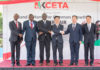
The government of Kenya is seeking into intra-Africa tourism opportunities within the African Continental Free Trade Area (AfCFTA) to unlock the sector's projected Ksh 1 trillion contributions to the economy by end of 2027. Speaking during the opening ceremony of the 15th edition of the Magical Kenya Travel Expo (MKTE) at Uhuru Gardens. Deputy President of Kenya, Kithure Kindiki noted that while Kenya leads its East Africa counterparts on visitor arrivals, the country must leverage continental integration to achieve double-digit growth seen in Asian and European markets. "Tourism is a critical anchor of Kenya's economy and a pillar of our Bottom-up Economic Transformation Agenda (BETA). With Africa emerging as one of the strongest-performing regions in global tourism recovery, we must capitalize on AfCFTA opportunities. The tourism sector must become a critical interlocutor in transport, logistics, trade, investments and MSME sectors, driving synergized policy outcomes." Kindiki stated. According to the World Tourism and Travel Council (WTTC). Kenya's tourism sector is set to contribute a record Ksh 1.2 trillion to the economy, equivalent to more than 7% of national Gross Domestic Product (GDP). The sector is also expected to support 1.7 million jobs in 2025, maintaining over 8% of total national employment. The DP outlined government's infrastructure investments to support the growth of the sector, including the Nairobi-Nakuru-Mau Summit Highway, Lamu Port development. SGR expansion and new direct flights from global hubs. He stressed the need to diversify beyond traditional offerings, citing emerging products like astro-tourism, desert safaris in Chalbi, and tech-tourism leveraging Kenya's "silicon savannah" reputation. "We must market the complete Kenya story-from our technological innovation to our athletic excellence, from the Cradle of Humankind to our forty vibrant communities," he added. Equally, Kindiki also stressed the importance of sustainability, linking the government's tree planting initiative to eco-tourism enhancement, while ensuring tourism benefits reach grassroots communities. The expo has drawn over 6,500 delegates from 40 countries, including 400 exhibitors and 200 international buyers with the opportunity to explore how strategic investments and collaborative frameworks can contribute to the African tourism ecosystem which presents unprecedented growth potential. Tourism and Wildlife CS Rebecca Miano hailed the expo's evolution into a continental platform noting its critical role in accelerating investment flows for infrastructure development which directly supports Kenya's tourism target of 5.5 million visitors by 2027. "Infrastructure development through public-private partnerships remains our cornerstone strategy. By leveraging private sector expertise and government support, we are building world-class facilities that enhance visitor experiences while creating sustainable employment for our communities across the tourism value chain." Miano emphasized. On her part, Director of Trade in Services, Investment and Digital Trade AfCFTA Secretariat, Emily Mburu, highlighted the strategic importance of strategic tourism partnerships, particularly for advancing continental market integration. "Tourism shows how AfCFTA works in practice, public-private frameworks attract Foreign Direct Invest (FDI), build world-class infrastructure and create employment across borders. When tourists move seamlessly across Africa, they activate supply chains, stimulate trade and prove that integration delivers immediate, tangible benefits to African economies," he noted. The expo's focus on intra-African partnerships comes at an opportune time, given Africa's growing contribution to Kenya's tourism earnings. Africa was the leading source of tourist arrivals in 2024, accounting for 40.8% of international visitors. This year's Magical Kenya Travel Expo will incorporate digital matchmaking technology which facilitates pre-scheduled B2B meetings between buyers and sellers, maximizing business outcomes. It will also feature five-day familiarization trips, integrated marketing campaigns and dedicated sessions on creative economy integration within tourism.
The government of Kenya isseeking into intra-Africa tourism opportunities within the AfricanContinental Free Trade Area (AfCFTA) to unlock the sector's projectedKsh 1 trillion contributions to the economy by end of 2027. Speaking during the opening ceremony of the 15th edition of the MagicalKenya Travel Expo (MKTE) at Uhuru Gardens. Deputy President of Kenya,Kithure Kindiki...
By Samson Oyugi‎‎‎Mbagathi County Referral Hospital has, over the last two years, undergone significant upgrades in service delivery, now attracting more than 1,000 patients daily.‎‎The hospital has become the first county facility and the third public hospital in Nairobi after Kenyatta National Hospital (KNH) and Kenyatta University Teaching, Referral and Research Hospital (KUTRRH) to offer pre-term dialysis...
The Democratic Republic of Congo (DRC) is seeking investment partners to unlock 90% of its mineral resources which remain untapped. Speaking at African Mining Week 2025 in Cape Town, Louis Watum Kabamba, DRC Minister of Mines, urged industry leaders to partner with the country in driving sustainable mining sector growth. “Ninety...
Bantu Gazette (www.BantuGazette.com), a new quarterly publication committed to advancing African perspectives on politics, culture, and economic transformation, has officially launched (https://apo-opa.co/4nStYEk). The magazine introduces a platform that presents Africa’s stories through the voices of those who live them. Grounded in the belief that narrative power must be anchored on African soil, Bantu Gazette explores how the continent defines its own direction through stories told by Africans themselves. It blends traditional storytelling with modern policy insight, offering thoughtful engagement with the forces shaping African societies. From Lagos to Johannesburg, Marrakech to Lilongwe, Addis Ababa to Dakar, and Douala to Gaborone, the magazine reflects a wide regional lens. “Who tells Africa’s story?” asks Editorial Director Felix Tih in the inaugural issue. He highlights a quote from Nigerian novelist Chinua Achebe that says, “If you don’t like someone’s story, write your own.” “This wisdom guides everything we do,” Tih explains. “As Africans, we shape our future by documenting our challenges, celebrating our breakthroughs, and creating space for honest self-reflection.” The first issue presents perspectives on energy innovation, cross-border trade, education reform, and the growing influence of African youth on the global stage. Highlights include a feature on digital sovereignty, profiles of women driving progress in the energy sector, and a deep look into Ethiopia’s evolving political landscape. Readers will also find stories of young leaders redefining business, technology, and policy across the continent. Bantu Gazette is the editorial wing of Bantu Agency, a communications firm that partners with institutions and changemakers across Africa to shape compelling narratives. In collaboration with journalists, researchers, and creatives from more than 12 countries, the magazine creates space for thoughtful reflection and strategic storytelling. Published in both print and digital formats, future editions will include multilingual content in English and French. Thematic issues will spotlight diaspora networks, infrastructure, urban innovation, intracontinental trade, artificial intelligence and climate resilience. Distribution through cultural centers, academic institutions, and professional networks will help expand access to readers throughout the continent and beyond. Youth leadership is central to the magazine’s voice. Each issue combines longform journalism with strategic insight, creative work, and contributions from rising thinkers across sectors. “We are building a publication that reflects the complexity of African societies and the brilliance of African ideas,” said Tih. “Bantu Gazette is a space for those who shape, question, and reimagine the future, guided by experience, grounded in truth, and driven by vision.” Bantu Gazette is available at https://apo-opa.co/4nStYEk. The publication welcomes contributions from writers, researchers, and creatives committed to advancing Africa’s voice in global dialogue.
Bantu Gazette (www.BantuGazette.com), a new quarterly publication committed to advancing African perspectives on politics, culture, and economic transformation, has officially launched (https://apo-opa.co/4nStYEk). The magazine introduces a platform that presents Africa’s stories through the voices of those who live them. Grounded in the belief that narrative power must be anchored on African soil, Bantu Gazette...
Africa is seeking to move beyond being a raw material supplier and establish itself as a critical energy player, government leaders said at African Energy Week (AEW) 2025: Invest in African Energies, highlighting investment opportunities, energy transition based on domestic resources, and the need for predictable policies for investors. Anatole Collinet Makosso, Prime Minister of the Republic of Congo, said the continent must leverage its vast oil and gas resources – as well as solar, geothermal and wind potential – to drive development. “Without energy justice, energy transition is an illusion,” he said. “To offer clean, affordable and reliable energy is not an option – it’s an imperative. Our need for development cannot be sacrificed. We need to support energy transition fully, but it must be based on our gas and petroleum resources.” Makosso highlighted key projects including Eni’s Congo LNG initiative, the recently licensed deepwater Nzombo block, the Banga Kayo gas monetization project and Perenco’s ongoing modernization and drilling works to extend field lifespans. “These initiatives are part of the national and continental strategy. Africa must no longer be considered as a provider of raw materials – it must be considered as a critical energy player,” he said. He called the continent “the investment opportunity of the century,” stressing that the goal is not merely to attract capital but to build a competitive, sovereign Africa. Nigeria’s Senator Heineken Lokpobiri, Minister of State for Petroleum Resources (Oil), outlined measures the country has taken to boost investor confidence and expand production, including an Executive Order signed earlier this year to reduce production costs. The sector overhaul has already spurred significant activity, including $5 billion in new Shell investment in Bonga North, planned investments in Bonga Southwest and other deepwater projects, and the restructuring of state-owned NNPC into a commercially viable company. “Investors want predictability, efficiency and incentives, as well as alignment between stakeholders and industry,” he said. Lokpobiri also pointed to successes from asset divestments as evidence of Nigeria’s growing strategic role. “The companies that acquired IOC assets – Renaissance acquiring Shell’s onshore and shallow-water assets, Seplat acquiring ExxonMobil’s, Oando acquiring Eni’s – between the time the divestments were enabled and today, we have increased production by at least 200,000 barrels per day. That shows that divestment was the right decision,” he said. Looking ahead, Lokpobiri urged Africa to capture more of global oil and gas capital expenditure, and to “transition from being net importer to strategic value creator.” He also emphasized the need for partnerships rather than energy abandonment: “No continent or country is slowing down. What is needed is to reduce emissions, not abandon any form of energy, and what we need from the West is partnership.”
 Africa is seeking to move beyond being a raw material supplier and establish itself as a critical energy player, government leaders said at African Energy Week (AEW) 2025: Invest in African Energies, highlighting investment opportunities, energy transition based on domestic resources, and the need for predictable policies for investors. Anatole Collinet Makosso, Prime Minister...
African Energy Week (AEW): Invest in African Energies announced the winners of the AEW 2025 awards during a ceremony held on Tuesday. Celebrating trailblazers shaping the future of the African energy sector, the awards recognized excellence across the African energy sector. Mohammed S. Barkindo Lifetime Achievement Award: François Perrodo François Perrodo was the recipient of the Lifetime Achievement Award for his dedication to positioning Perenco into one of Africa’s most influential energy companies. Under his leadership, Perenco has become synonymous with frontier exploration, responsible production and gas-led development across Central and West Africa. Mohammed S. Barkindo Lifetime Achievement Award: Adriano Mongini Adriano Mongini was honored with the Lifetime Achievement Award for leading Azule Energy through a series of impactful oil and gas projects. From day one, he focused on building Azule not just as Angola’s largest independent oil and gas producer, but as a company that invests in training, local content and national development. Lifetime Achievement Award: Katrina Fisher Katrina Fisher was honored with the Lifetime Achievement Award for her contributions towards Africa’s energy sector. She has led ExxonMobil Angola through an ambitious exploration and production drive, while her dedication to STEM has created significant opportunities for youth and women in energy. Lifetime Achievement Award: Sebastião Gaspar Martins Sebastião Gaspar Martins secured the Lifetime Achievement Award for his commitment to transforming Angola’s national oil company Sonangol into a competitive operator. His leadership has not only seen the company transition into a major player but has helped shape Angola into one of the continent’s biggest producers. Lifetime Achievement Award: Haitham Al Ghais Haitham Al Ghais won the Lifetime Achievement Award for his commitment to Africa. Al Ghais has consistently put Africa at the forefront of global discussions on finance, just transition and sustainable development. Lifetime Achievement Award: Jubril Adewale Tinubu Jubril Adewale “Wale” Tinubu was the recipient of the Lifetime Achievement Award for his dedication to building Oando into one of Africa’s leading energy companies. He has carried the company through periods of uncertainty and transformation, growing it into a multinational enterprise that represents African resilience and ambition. ESG Leader of the Year: ExxonMobil Recognized for STEM Africa, equipping 3,000+ students and educators with industry-ready skills, aligning social impact with long-term workforce development across Nigeria, Namibia, Angola and Mozambique. Service Provider of the Year: Technip Energies Awarded for engineering excellence delivering complex LNG, hydrogen and decarbonization projects - from GTA to Rovuma - while maximizing safety, quality and local value creation. Local Content Champion of the Year: Levene Energies Awarded for scaling African-led projects anchored in local suppliers, talent pipelines and mentorship, building durable industrial capacity across West Africa. International Local Content Champion of the Year: Woodside Energy Awarded for its commitment to capacity building, skills transfer and local empowerment across the countries it operates. Reformer of the Year: Ministry of Petroleum Resources, Nigeria Awarded for operationalizing the Petroleum Industry Act, modernizing licensing and flexible PSCs - unlocking billions in FIDs, infrastructure progress and transparent, investor-friendly processes. Exploration & Production Leader of the Year: Azule Energy Recognized for Agogo FPSO start-up and Angola’s first dedicated gas discovery, boosting production and de-risking Lower Congo Basin potential. Deal of the Year: Vitol Celebrated for strategic stakes in Baleine and Congo LNG, enhancing low-carbon upstream exposure and strengthening West and Central African gas positions. CSR Project of the Year: ConocoPhillips Honored for two decades of Bioko Island Malaria Elimination Project support - dramatically reducing malaria, strengthening health systems and delivering evidence-based community impact in Equatorial Guinea. Gas Monetization Strategy: Greater Tortue Ameyim Development Celebrated for first gas and reaching its commercial operation date for the FLNG vessel in 2025, inaugurating MSGBC LNG exports and a scalable cross-border monetization framework.
African Energy Week (AEW): Invest in African Energies announced the winners of the AEW 2025 awards during a ceremony held on Tuesday. Celebrating trailblazers shaping the future of the African energy sector, the awards recognized excellence across the African energy sector. Mohammed S. Barkindo Lifetime Achievement Award: François Perrodo François Perrodo...
An opening fireside chat held during the opening ceremony of the African Energy Week (AEW): Invest in African Energies 2025 conference showcased the value of an Africa-first approach when it comes to the continent’s gas developments. Ministers from Senegal and Ghana discussed how recently-launched projects stand to drive sustainable growth in West Africa, with project developer Kosmos Energy committing to focus on domestic gas opportunities. The opening ceremony was sponsored by Kosmos Energy. In recent years, West Africa has established itself as one of the continent’s most dynamic energy markets. In 2024, Senegal became a global oil and gas producer through the commissioning of the Sangomar oil and gas field and the Greater Tortue Ahmeyim (GTA) developments. The GTA project, developed through a partnership led by BP and Kosmos Energy, boasts an initial capacity of 2.3 million tons per annum (mtpa) in the first phase, with a second phase set to increase output to 5 mtpa. While the project primarily targets exports, its partners are exploring opportunities for the domestic market. Birame Soulèye Diop, Senegal’s Minister of Energy, Petroleum and Mines, stated that, “In Senegal, we have a goal to reach universal access to energy by 2029. Today, we are a country that exports oil and gas. But the cost to access fuel is still high. We would like to produce more for the country so that we can access resources for electricity. With gas, there are a lot of opportunities.” Minister Diop elaborated on the country’s plans to convert operational oil refineries to process gas, aiming to reduce fuel costs and expand access across the country. Kosmos Energy has also shifted its focus towards the domestic market. In addition to GTA, the company is advancing the development of the Yakaar-Teranga project. Targeting a final investment decision in 2025, the project will supply gas for the domestic market, specifically power generation facilities. “Fundamental to the development of Senegal is the use of gas for domestic purposes. That is our next agenda: to work with the ministry to expand the scheme to deliver domestic gas,” said Andrew Inglis, CEO, Kosmos Energy. Regional neighbors serve as a strong example for the role that gas plays in delivering low-cost energy. Ghana, for example, has been highly effective in monetizing gas. John Abdulai Jinapor, Minister of Energy & Green Transition, Ghana, explained that “Gas is an essential commodity. We have a gas-to-power policy, with gas accounting for 90% of our fuel in Ghana. What we have achieved so far can serve as a model for other economies so that African can achieve energy security through gas.” Active in both Senegal and Ghana, Kosmos Energy plays an instrumental part in driving oil and gas projects. Inglis emphasized that aligned national policies and strong public-private partnerships have been fundamental in successfully delivering projects in both countries. He said: “An aligned national agenda is the bed-rock of investment. If you are aligned on intent, then delivery is a lot easier. With both Senegal and Ghana, there is clarity in terms of what the countries need and Kosmos Energy is ready to support that.”
An opening fireside chat held during the opening ceremony of the African Energy Week (AEW): Invest in African Energies 2025 conference showcased the value of an Africa-first approach when it comes to the continent’s gas developments. Ministers from Senegal and Ghana discussed how recently-launched projects stand to drive sustainable growth in West Africa, with project developer Kosmos...
Radisson Hotel Group (https://RadissonHotels.com/)announces the expansion of its Radisson Individuals brand, driven by the brand’s exceptional growth to over 100 hotels in operation and under development since its launch in 2020. Today, the portfolio encompasses a variety of property types and experiences appealing to a broad traveler demographic. With an extended brand portfolio that now encompasses the...
The Ministry of Health, together with partners, joined Kenyans at the 2nd International EndPPH Run at Ulinzi Sports Ground to raise awareness on Postpartum Haemorrhage (PPH)—the leading cause of maternal deaths in Kenya, accounting for up to 45% of cases. Despite progress in maternal and child health, PPH continues to claim the lives of too many mothers, especially in 13 hotspot counties such as Tana River, Garissa, West Pokot, Homa Bay, Migori, and Turkana, where lifesaving interventions are being prioritized. Speaking during the event, the Director General for Health, Dr. Patrick Amoth, emphasized the importance of sustained advocacy, timely interventions, and strong community awareness in saving lives. The Ministry of Health, in collaboration with counties and development partners, is committed to ending preventable maternal deaths through quality care, innovation, skills building, and stronger health systems. With early detection and prompt treatment, no mother should die while giving life. Run for Her – Together Against the Number One Killer of New Mums.
The Ministry of Health, together with partners, joined Kenyans at the 2nd International EndPPH Run at Ulinzi Sports Ground to raise awareness on Postpartum Haemorrhage (PPH)—the leading cause of maternal deaths in Kenya, accounting for up to 45% of cases. Despite progress in maternal and child health, PPH continues to claim the lives of...
In a move that has sent shockwaves through the quick-service restaurant industry, KFC Africa (https://global.KFC.com) announced today that it will do the unthinkable: reveal its secret recipe. The recipe has been the stuff of corporate legend, with only a handful of people knowing the complete formula. Competitors have tried to reverse-engineer it, conspiracy theorists have developed elaborate ideas about it, and social media has played its part in stoking the flames. The objective has always been the same: to work out what’s in the recipe. And on Wednesday 8 October, the truth will finally be revealed. The world deserves the truth “People have been asking us for years about our secret recipe,” says Grant Macpherson, Chief Marketing & Digital Officer, KFC Africa. “They’ve guessed, they’ve pleaded and they’ve done their best to copy it. And now we’ve decided the world can finally share it. We think it will be better for everyone if it’s out in the open. “History will decide whether or not this is a masterstroke, but we believe it will be good for us and most importantly good for South Africa.” Macpherson says KFC will explain its reasons for revealing the secret recipe only on the day of the big reveal. Precious asset “There’s obviously going to be a lot of speculation about why we would give away this precious asset, and why now,” he says. “Our loyal customers may be wondering whether this will kill the mystique that has made KFC South Africa’s biggest quick-service restaurant brand. “We don’t think it will, but everything will become clear on 8 October. Until then, all the guesses and opinions will be just that.
In a move that has sent shockwaves through the quick-service restaurant industry, KFC Africa (https://global.KFC.com) announced today that it will do the unthinkable: reveal its secret recipe. The recipe has been the stuff of corporate legend, with only a handful of people knowing the complete formula. Competitors have tried to reverse-engineer...

MOST POPULAR

HOT NEWS